Slight Positive Pressure Ventilation VS Negative Pressure Ventilation
Ventilation is central to environmental control in poultry houses. The choice of ventilation method directly impacts flock health, medication costs, heating expenses, and ultimate production performance. Currently, the mainstream ventilation methods used on poultry farms fall into two categories: traditional negative-pressure ventilation and micro-positive-pressure ventilation. These methods operate on different principles and offer distinct advantages and disadvantages.
I. Traditional Negative-Pressure Ventilation: Principles, Advantages, and Disadvantages
1. Working Principle
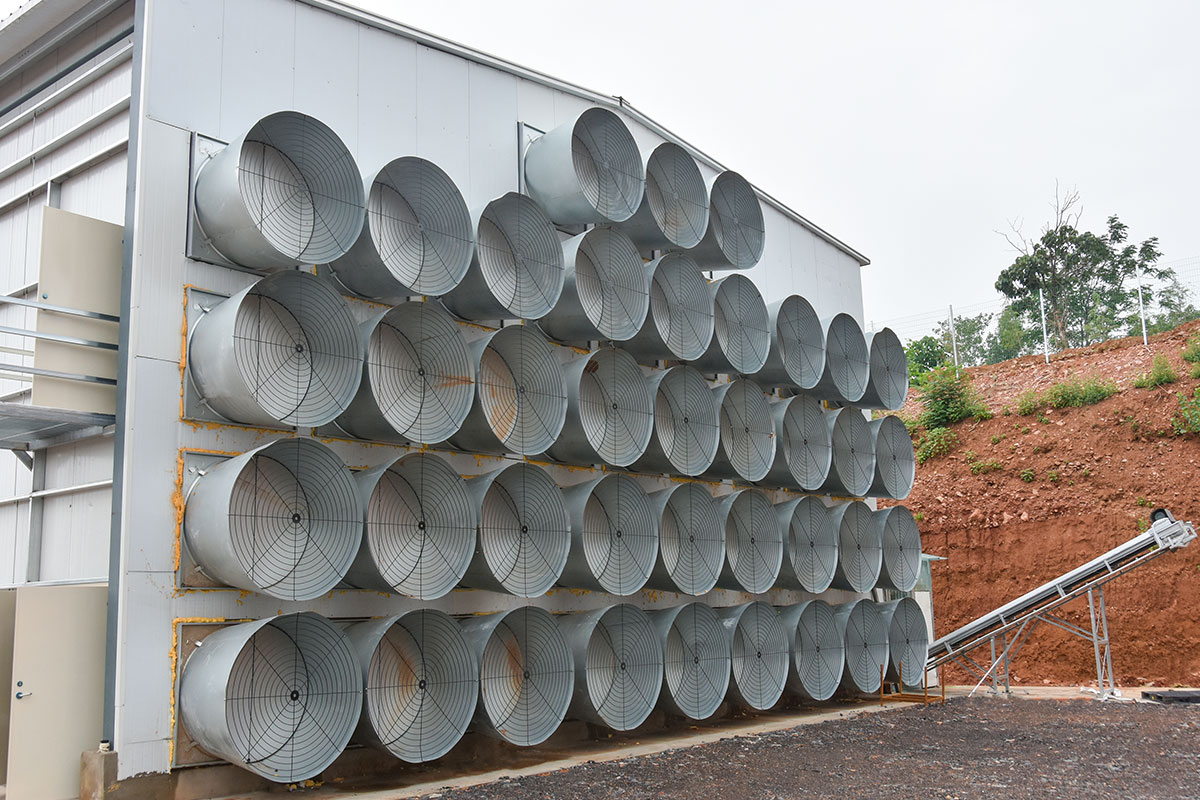
Negative-pressure ventilation relies on exhaust fans to draw air out, creating negative pressure inside the poultry house. Air naturally enters through doors, windows, wall gaps, and air inlets, facilitating airflow exchange.
2. Advantages
Simple equipment: Uncomplicated structure and easy installation.
Low initial investment: A mature technology used in domestic poultry farms for decades, with controllable costs.
3. Drawbacks
① Passive biosecurity
Air can enter through gaps anywhere, allowing pathogens, dust, and aerosols from wild birds to infiltrate the house. External pathogens are difficult to guard against, leading to a high risk of flock illness and increased medication costs.
② Drafts and pressure fluctuations
Internal pressure fluctuates easily during windy weather, creating localized drafts; birds at the lower levels get chilled, leading to recurring respiratory issues.
③ Difficulty balancing ventilation and heat retention
In winter, cold air enters directly, driving up heating costs. Reducing ventilation to retain heat prevents the exhaust of ammonia and moisture; conversely, increasing ventilation makes it impossible to maintain the temperature. Achieving both adequate ventilation and heat retention simultaneously is difficult.
II. Slight Positive Pressure Ventilation: Principles, Advantages, and Disadvantages
1. Working Principle
In a slight positive pressure ventilation system, a fan draws in outside air, filters and pressurizes it, and delivers it into the poultry house, maintaining a state of slight positive pressure inside. Exhaust air is expelled through dedicated vents; air flows outward through all gaps, preventing contaminated outside air from entering.
2. Advantages
① Blocks external pathogens at the source
Contaminated outside air is prevented from entering, and pathogens are filtered out; this reduces disease incidence and medication costs while significantly enhancing biosecurity levels.
② Uniform airflow without drafts; minimal stress on the flock
Air is distributed evenly via ducts, eliminating localized drafts and ensuring consistent temperature distribution. The flock enjoys greater comfort, resulting in reduced stress and lower mortality/culling rates.
③ Compatible with heat recovery for simultaneous ventilation and thermal insulation
In winter, heat from exhaust air can be recovered to preheat incoming fresh air. This achieves both insulation and ventilation, saving fuel and electricity while optimizing operating costs.
④ High resistance to external weather fluctuations
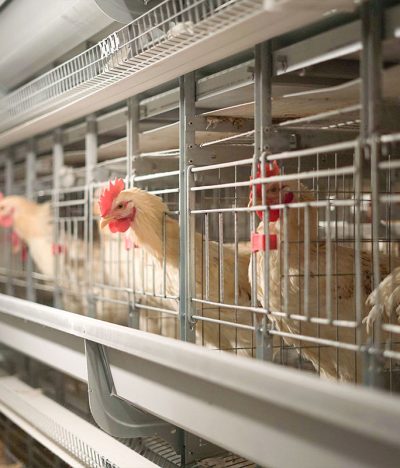
The internal environment remains stable even in strong winds, making it ideal for the stable conditions required in high-density cage-rearing systems and large-scale, intensive poultry farms.
3. Drawbacks
Higher initial equipment investment compared to negative pressure systems.
Requires proper maintenance of filtration systems; otherwise, a drop in filtration efficiency will compromise ventilation performance.
Requires effective operation and maintenance protocols, placing specific demands on the professional competence of management personnel.
III. Negative Pressure Ventilation vs. Slight Positive Pressure Ventilation
| Comparison Criteria | Negative-pressure ventilation | Slight positive pressure ventilation |
| Airflow direction | Air is exhausted outward, drawing air in through gaps | Filtered pressurized air supply with outward pressure relief through gaps |
| Biosafety | Pathogens from outside easily enter through gaps | Blocks external pathogens at the source |
| Draft risk | Pressure fluctuations on windy days can cause unwanted drafts | Uniform airflow distribution via ducts; no localized drafts |
| Ventilation and thermal insulation | Cold winter air enters directly; difficult to balance conditions | Heat recovery options available, balancing ventilation with thermal insulation |
| Impact of external weather | Highly susceptible to strong winds | Less susceptible to external conditions; more stable |
| Initial investment | Low | Higher |
| O&M requirements | Simple | Requires proper filter maintenance and reasonable operational management |
| Applicable scenarios | Older facilities, small-scale operations, limited budgets | Suitable for new large-scale poultry farms, high-density cage systems, and facilities with strict biosecurity requirements |
Negative-pressure ventilation works by exhausting air outward, allowing outside air to seep in haphazardly; slight positive-pressure ventilation involves supplying filtered, clean air while preventing the entry of contaminated air.
Negative-pressure ventilation: Air is exhausted outward, while outside air enters randomly through gaps; balancing ventilation with heat retention is difficult, and external pathogens easily invade.
Slight positive-pressure ventilation: Filtered fresh air is supplied under pressure, causing air to flow outward through gaps; this blocks external contamination, ensures uniform airflow without drafts, balances ventilation and heat retention, reduces mortality and culling rates, and improves production performance.
Q: Can slight positive pressure ventilation completely replace negative pressure ventilation?
A: Not necessarily. Each method has its own suitable applications. Slight positive pressure ventilation offers distinct advantages regarding biosafety, uniform airflow, and the balance between thermal insulation and ventilation; however, it entails higher initial investment and stricter operational and maintenance requirements. Existing facilities can be retrofitted gradually based on budget and needs, while new large-scale poultry farms should prioritize slight positive pressure systems.
Q: Are the operating costs of slight positive pressure ventilation high?
A: Initial equipment costs are higher than those for negative pressure systems. However, when paired with heat recovery technology, the system can capture heat from exhaust air to preheat incoming fresh air during winter—saving on fuel and electricity—which may result in lower long-term operating costs. Additionally, reduced disease incidence and lower medication usage contribute to superior overall economic benefits.
Q3: Is it difficult to retrofit an existing poultry farm for slight positive pressure ventilation?
A: The difficulty depends on the structure of the existing housing. Typically, the process requires installing filtered air intake systems, ductwork, and exhaust vents, as well as sealing any gaps or leaks. It is recommended to conduct a ventilation assessment before formulating a phased retrofit plan.
Ventilation is not merely about “having airflow”; it is a systematic process involving the type of air supplied, as well as its intake and exhaust points. While negative-pressure ventilation has been used for years—valued for its simplicity and low cost—micro-positive-pressure ventilation represents the future of large-scale, high-biosecurity farming, offering superior cleanliness and uniformity while effectively balancing the need for heat retention.
If your poultry farm is struggling with the difficulty of preventing external pathogens, persistent drafts, or the challenge of balancing ventilation with heat retention during winter, micro-positive-pressure ventilation is worth serious consideration. Existing facilities can be retrofitted, though the system is particularly well-suited for new, large-scale farms. Choosing the right ventilation method effectively lays an invisible “foundation” for flock health and production performance.