Difference Between Hot-Dip Galvanized and Hot-Dip Zinc-Coated Poultry Cage Equipment
Hot-dip galvanizing and hot-dip zinc plating are the two most frequently mentioned anti-corrosion treatments for poultry cages, directly affecting equipment lifespan and poultry product quality.
In modern poultry farming, the materials and anti-corrosion processes used in cage equipment directly impact farming efficiency, equipment lifespan, and poultry product quality. Hot-dip galvanizing and hot-dip zinc plating are the two most frequently mentioned anti-corrosion treatments for poultry cages—are they the same process, or are there differences? Which one is more suitable for poultry cage equipment?
I. Hot-Dip Galvanizing and Hot-Dip Zinc Dipping
First, it’s crucial to clarify a core concept: in most industry standards and practical applications, “hot-dip galvanizing” and “hot-dip zinc dipping” refer to the same process.
Hot-dip galvanizing (or hot-dip zinc dipping) is a metal corrosion protection process where rust-removed steel components are immersed in molten zinc at approximately 450℃-500℃, causing a zinc layer to adhere to the steel surface, thus achieving corrosion resistance. The core of this process lies in the formation of a zinc-iron alloy layer between the zinc layer and the steel substrate, achieving a metallurgical bond, resulting in a strong, durable, and reliable coating.
The reason for the two terms, “hot-dip galvanizing” and “hot-dip zinc dipping,” is primarily due to industry conventions and regional differences—the former emphasizes the “galvanizing” result, while the latter emphasizes the “immersion” process, but essentially they refer to the same technology.
Conclusion first: In the poultry cage equipment industry, when manufacturers use “hot-dip galvanizing” or “hot-dip zinc dipping,” they are almost always referring to the same process. What really needs to be distinguished is hot-dip galvanizing (hot-dip zinc) and cold galvanizing (electroplated zinc).
II. Hot-dip galvanizing (hot-dip zinc) vs. cold galvanizing (electro-galvanizing): Key differences
To understand the value of hot-dip galvanized chicken cages, it is essential to first clarify their fundamental difference from cold-dip galvanizing.
| Comparison Dimensions | Hot-dip galvanizing (Hot-dip zinc plating) | Cold galvanizing (electro-galvanizing) |
| Process Principle | Immersion in molten zinc, metallurgical bonding | Electrochemical deposition, physical adhesion |
| Coating Thickness | 65-200μm or more | 5-30μm |
| Corrosion Resistance | Extremely strong, dozens of times stronger than cold galvanizing | Relatively weak |
| Service Life | 15-20 years | Rusts in 2-3 years, scrapped in 6-7 years |
| Surface Condition | Relatively rough, may have zinc nodules/burrs | Smooth, bright |
| Cost | Higher strength | Lower gloss |
Cold galvanizing (also known as electro-galvanizing) involves depositing a zinc layer on the surface of a workpiece through an electrochemical reaction at room temperature. The coating is thin and has weak adhesion, and it will quickly corrode in the high humidity and high ammonia environment of a chicken coop. Hot-dip galvanizing, on the other hand, forms a thick zinc layer that provides long-lasting and reliable corrosion protection.
III. Core Advantages of Hot-Dip Galvanized Chicken Cages
1. Extended Service Life
The service life of hot-dip galvanized chicken cages can generally reach 15 to 20 years. Under standard hot-dip galvanizing processes, products with a qualified zinc coating thickness can remain rust-free for decades in normal environments. For large-scale farms, this means that a single equipment investment can cover multiple breeding cycles, significantly reducing equipment replacement frequency and long-term costs.
2. Superior Corrosion Resistance
The internal environment of chicken houses is unique—high humidity, high ammonia, and corrosive manure—making it extremely corrosive to metal equipment. A qualified hot-dip galvanized layer thickness is typically above 80μm, with high-quality processes reaching 200-400μm. A thick zinc layer effectively isolates the steel substrate from corrosive media, maintaining rust resistance even in harsh breeding environments.
3. Comprehensive Protection Without Dead Angles
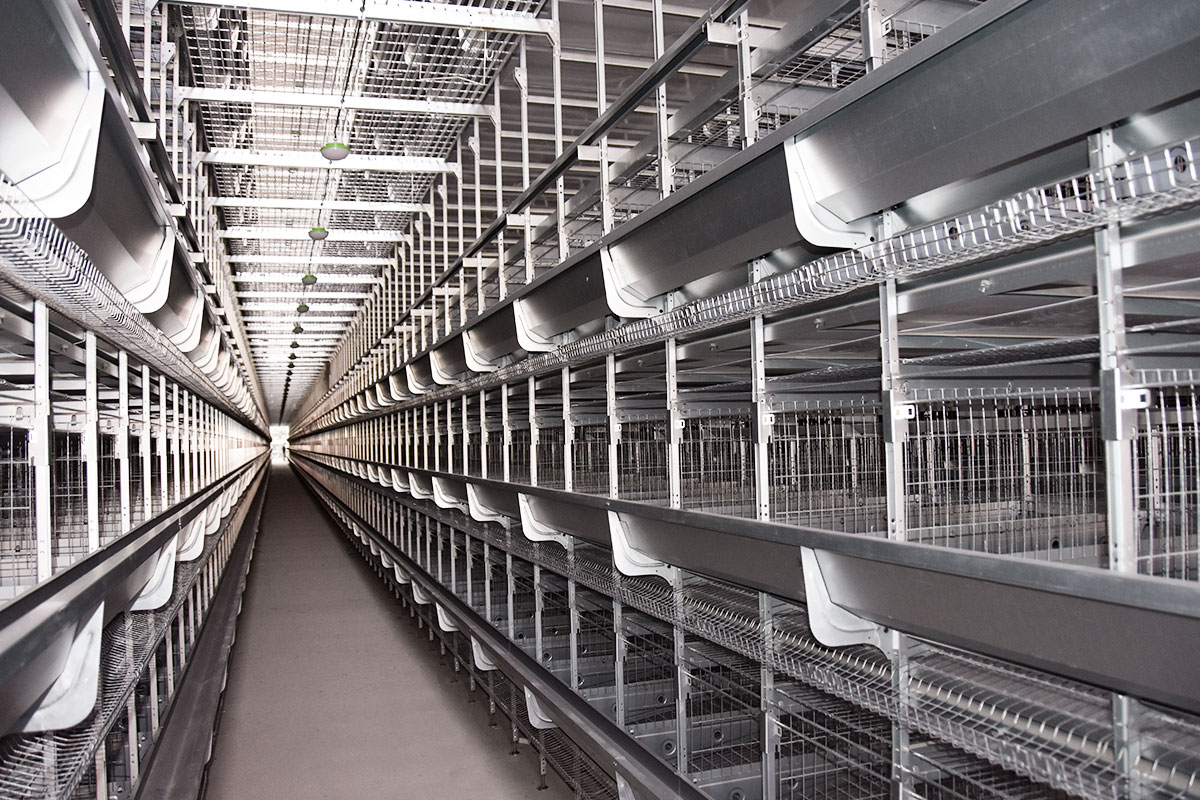
The hot-dip galvanizing process immerses the entire cage in molten zinc, ensuring that every part—including recesses, sharp corners, and hidden areas—is coated with a zinc layer, achieving comprehensive protection. This is something that processes such as spraying are difficult to achieve.
IV. Precautions and Potential Problems of Hot-Dip Galvanized Chicken Cages
⚠️ Burrs and Surface Roughness Issues
The most frequently mentioned drawback of hot-dip galvanized chicken cages is uneven zinc immersion in the galvanizing bath, which can lead to excessive burrs (zinc nodules). This is a common technical challenge in the industry.
Specific hazards caused by burrs include:
* Damage to chickens: Burrs can easily scrape off feathers or even scratch the chicken’s body, increasing the risk of infection with diseases such as Staphylococcus aureus.
* Increased egg breakage rate: Burrs can easily puncture freshly laid eggs, leading to a higher egg breakage rate and making it impossible to produce branded eggs.
* Affecting poultry product quality: Rough surfaces can contaminate eggshells, affecting the appearance of eggs.
✅ How to avoid these problems?
Choose a manufacturer with mature technology: The severity of the burr problem is directly related to the manufacturer’s technological level. High-quality manufacturers can effectively reduce burr formation by precisely controlling parameters such as galvanizing time, temperature, and speed.
Require post-treatment: Some manufacturers will add a manual grinding process after galvanizing to remove burrs.
Examine physical samples: Before purchasing, be sure to examine physical samples to check whether the surface is smooth and whether there are obvious zinc nodules.
V. Comparative Analysis of Corrosion Prevention Processes for Poultry Cages
Besides hot-dip galvanizing, the following are some other mainstream corrosion prevention processes for poultry cages:
| Process Types | Service Life | Surface Finish | Corrosion Resistance | Cost | Applicable Scenarios |
| Hot-dip galvanizing | 15-20 years | Rougher | ★★★★★ | High-Medium | Large-scale, long-term farming |
| Cold galvanizing (electro-galvanizing) | 6-7 years | Smooth | ★★☆☆☆ | Low | Short-term, temporary farming |
| Electrostatic spraying | 15-20 years | Smooth and burr-free | ★★★★☆ | High-Medium | Laying hen farming with high surface quality requirements |
| Zinc-magnesium alloy wire | Never rusts | Good | ★★★★★ | High | High-end farming |
| Stainless steel | Over 20 years | Smooth | ★★★★★ | Highest | High-quality branded egg production |
Electrostatic spraying (also called electrostatic powder coating) involves applying powder coating onto the cage wire using high-voltage electrostatic adsorption. The resulting surface is smooth, aesthetically pleasing, and burr-free, making it less likely to injure chickens or break eggs, and its service life can also reach 15-20 years. However, its anti-corrosion layer is physically attached, and once damaged, rust may begin to appear from the damaged area.
Hot-dip galvanizing and hot-dip zinc plating are essentially different names for the same process, and can be considered equivalent in the poultry cage equipment field. What truly needs attention is the fundamental difference between hot-dip galvanizing (hot-dip zinc plating) and cold galvanizing (electro-galvanizing).
Hot-dip galvanized chicken cages, with their exceptionally long service life of 15-20 years and superior corrosion resistance, have become the preferred solution for large-scale farms. Although some manufacturing defects such as burrs may exist, these problems can be effectively controlled by choosing a technically competent manufacturer and implementing appropriate post-processing.
Investing in high-quality hot-dip galvanized chicken cages lays the most solid foundation for your poultry farming business.