Why Do the Manure Belts in Layer Hen Farms Constantly Drift Off-Track?
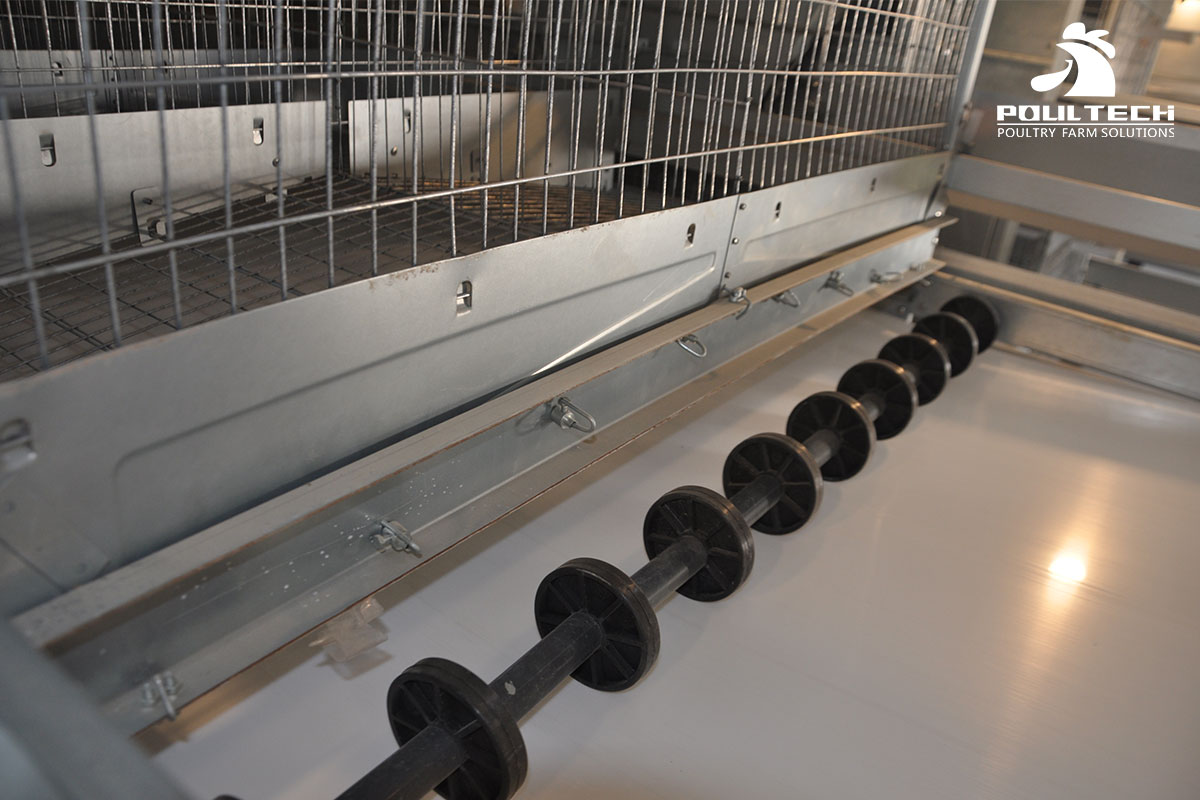
Manure belt misalignment is a very common equipment issue on laying hen farms. Once the belt begins to wander, the consequences range from edge wear, manure spillage, and incomplete scraping to severe issues like belt tearing or system jams—all of which compromise the poultry house environment and production management.
When faced with misalignment, many people’s first instinct is to adjust the tension; however, the root causes are often multifaceted. Fundamentally, misalignment occurs because the friction, tension, or resistance acting on the left and right sides of the belt is uneven during operation, causing it to drift continuously toward one side. To resolve the issue thoroughly, a systematic inspection is required, covering installation, equipment condition, the belt itself, the tensioning mechanism, and the manure load.
I. Start With a No-load Test to Identify the Type of Tracking Issue
When troubleshooting manure belt misalignment, the first step is not to make immediate adjustments, but to conduct a no-load test.
If the belt tracks correctly without a load but drifts after manure accumulates: The issue is likely caused by uneven manure distribution, manure adhering to the rollers, seized idler rollers, or misaligned scrapers.
If the belt drifts even during a no-load run: The problem is likely mechanical—such as an uneven frame, non-parallel roller axes, a misaligned belt seam, or uneven tension.
Accurately diagnosing the issue at this stage will make subsequent troubleshooting much faster.
II. Common Causes of Manure Belt Misalignment in Layer Hen Houses
1. Frame is not level or is deformed
If the manure belt frame is not leveled during installation, or if it becomes twisted or deformed due to prolonged stress, the belt will naturally drift toward the lower side. The frame serves as the foundation; if the foundation is not properly aligned, achieving stability through subsequent adjustments becomes difficult.
2. Axes of drive and driven rollers are not parallel
If the axes of the drive and driven rollers are not parallel to the frame, or if the two rollers are not parallel to each other, the belt will continuously drift to one side during operation. This type of issue typically manifests as misalignment in a fixed direction, and adjusting the tension provides only temporary relief.
3. Improper installation of support rollers or support plates
If the intermediate support rollers or plates—which support the belt—deviate from the centerline or are installed at the wrong angle, they can force the belt to one side. This is particularly problematic when a support roller fails to rotate or seizes up; the resulting difference in resistance—sliding friction on one side versus rolling friction on the other—causes the belt to drift.
4. Improperly aligned belt joint
This is the most common human-related cause.
If the cut is not perpendicular (90 degrees) to the belt edge when joining the ends, the joint becomes twisted (like a “twisted rope”), causing the belt to drift increasingly off-track during operation. If a newly joined belt drifts immediately, the joint should be the first thing checked.
5. Belt quality issues or uneven aging
Low-quality belts may suffer from inconsistencies in thickness, density, or elongation rates between the two sides. Over time, if one side undergoes prolonged stretching, a length discrepancy develops between the sides, leading to misalignment. Such issues are often difficult to resolve through simple tracking adjustments; in severe cases, the belt must be replaced.
6. Manure accumulation on drums or support rollers
This is the primary cause of misalignment during daily operation. Dried manure adhering to the surface of a drum or support roller effectively increases the diameter on that side, causing the linear speed to rise and the belt to drift toward the side with the manure buildup. If an idler roller becomes jammed by manure and stops rotating, it can cause uneven resistance on the two sides.
7. Uneven tensioning device settings
If the tensioning springs, threaded rods, or counterweights are adjusted differently on each side, or if there is uneven spring fatigue, the tension on the two sides of the manure belt will differ. Uneven tension naturally causes the belt to drift toward one side. While field experience often suggests that a belt “drifts toward the loose side rather than the tight side,” equipment designs vary by manufacturer; the key is to maintain consistent tension on both sides—always refer to the specific equipment manual for guidance.
8. Off-center manure loading or obstruction by foreign objects
If manure from the upper tier of cages falls onto only one side of the belt, or if the manure scraper is misaligned—resulting in an uneven manure distribution—the friction will be greater on the heavier side, causing the belt to drift toward that side. Additionally, objects such as dropped eggs, dead chickens, or feed bag fragments getting wedged between the belt edge and the frame can force the belt to shift toward the opposite side.
III. Quick Troubleshooting Steps for Manure Belt Misalignment
Power down and ensure safety. Disconnect the power supply before cleaning or making adjustments; never reach into the machine while it is running.
Inspect rollers and idlers. Check specifically for accumulated manure or clumps on the surfaces of the drive roller, driven roller, and idlers, and ensure the idlers rotate freely.
Check the manure belt joint. Draw a straight line across the belt and run it through one full cycle to see if the line becomes skewed. If it does, the joint is misaligned.
Check the tensioning device. Ensure the springs, threaded rods, or counterweights on both sides are symmetrical and the tension is uniform.
Check the frame and roller shafts. Ensure the frame is level and the axes of the drive and driven rollers are parallel.
Check manure distribution and foreign objects. Observe whether manure is piling up on one side, check if the scraper is positioned correctly, and look for foreign objects jamming the belt edges.
IV. Practical Tips for Adjusting Manure Removal Belt Misalignment
Clean first, then adjust. Misalignment often improves significantly after cleaning accumulated manure off the rollers and idlers.
Make small, frequent adjustments. Adjust by a quarter-turn or a very small angle at a time, then observe the operation for 10–20 minutes; avoid making excessive adjustments at once.
The belt drifts toward the loose side. On manure removal systems, the belt tends to drift toward the side with less tension; you can appropriately tighten that side (unless the manufacturer specifies otherwise, in which case follow their instructions).
Adjust forward relative to the drift. If the belt drifts toward a specific side, slightly adjust the roller or idler on that side forward (in the direction of travel) or adjust the opposite side backward.
Maintain symmetrical tension on both sides. After cleaning off manure, adjust the tension springs or threaded rods on both sides to be basically uniform, then observe the operation.
Re-test while running empty. After adjustment, run the system empty first, then gradually introduce manure load, confirming that the belt no longer drifts.
V. Routine Prevention Is More Important Than Repeated Realignment
Inspect the manure belt during every shift, observing whether the belt edges are drifting toward the frame.
Clean accumulated manure from the surfaces of drums and rollers daily to prevent caking.
Check roller rotation weekly; promptly replace or repair any rollers that are seized or stuck.
Periodically calibrate the levelness of the frame and the parallelism of the roller shafts.
Adjust the manure scraper to ensure manure falls evenly onto the center of the belt.
Ensure cuts are perpendicular and joints are smooth when splicing manure belts.
Maintain maintenance records and address any signs of belt drift immediately to prevent minor issues from escalating into major breakdowns.
Manure belt misalignment in layer hen farms may seem like a minor issue, but it often involves multiple factors, including the frame, drums, rollers, joints, tensioning systems, and manure load. When troubleshooting, do not focus solely on the tensioning device; instead, follow this sequence: assess operation while running empty, clean and inspect components, make fine adjustments to tension, and finally, re-test operation. Consistent daily cleaning and maintenance are essential for ensuring stable belt operation and minimizing downtime and safety risks.