Guidelines for managing ventilation in chicken houses during seasonal transitions
Climate Characteristics During Seasonal Transitions
Autumn and spring days are warmer but not as hot as summer, and nights are cooler but not as cold as winter. In theory, ventilation management should be easier under these conditions, but in practice, many poultry farms frequently encounter problems.
This is primarily due to four factors:
Insufficient number of side wall air inlets; Incorrect ventilation mode switching; Poor sealing of vertical air inlets; Lack of automated ventilation system control.
Common Problems with Ventilation During Seasonal Transitions
Inadequate Hardware
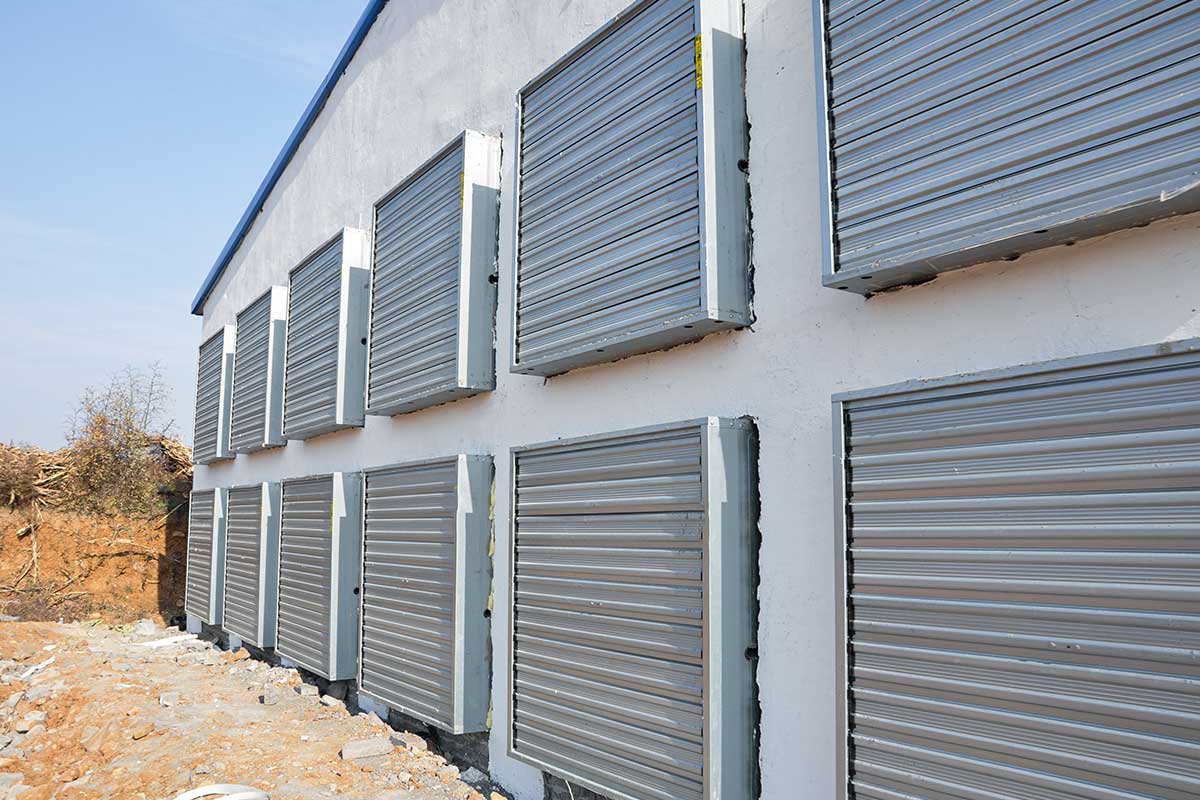
Many chicken houses have insufficient sidewall air inlets to meet transitional ventilation requirements, resulting in inefficient ventilation. Furthermore, vertical air inlets do not seal properly when closed, causing air leakage, which seriously impacts ventilation effectiveness and temperature control.
Improper Ventilation Method Selection
Farmers often mistakenly use vertical ventilation when transitional ventilation is appropriate, or switch ventilation modes too early, causing unnecessary cold stress to the flock.
Low Automation
Ventilation equipment lacking automated control systems struggles to adjust ventilation modes in response to real-time temperature changes. Manual adjustments often lag and fail to meet the actual needs of the flock.
Recommended Ventilation Strategies During Seasonal Transitions
Daytime Management: Use transitional or tunnel ventilation modes.
Nighttime Management: Switch to minimum ventilation mode.
Automation Upgrade: Automating the house ventilation system is recommended to improve response speed and management accuracy.
Important Notes:
During minimum ventilation, ensure tunnel air inlets are completely closed and sealed.
Manage timer settings appropriately to avoid over-ventilation.
Avoid using plastic film to seal air inlets, as this can affect ventilation accuracy.
Ventilation management during seasonal transitions is crucial for successful farming. By understanding the characteristics and application scenarios of different ventilation modes, improving hardware facilities, and utilizing automated control systems whenever possible, you can significantly improve the quality of the chicken house environment and ensure flock health and production performance. Remember: observing flock behavior is more important than simply focusing on temperature readings. Proper ventilation management requires patience and careful observation.