H-type stacking automatic chicken farming equipment
What is H-type cascading automated chicken farming equipment?
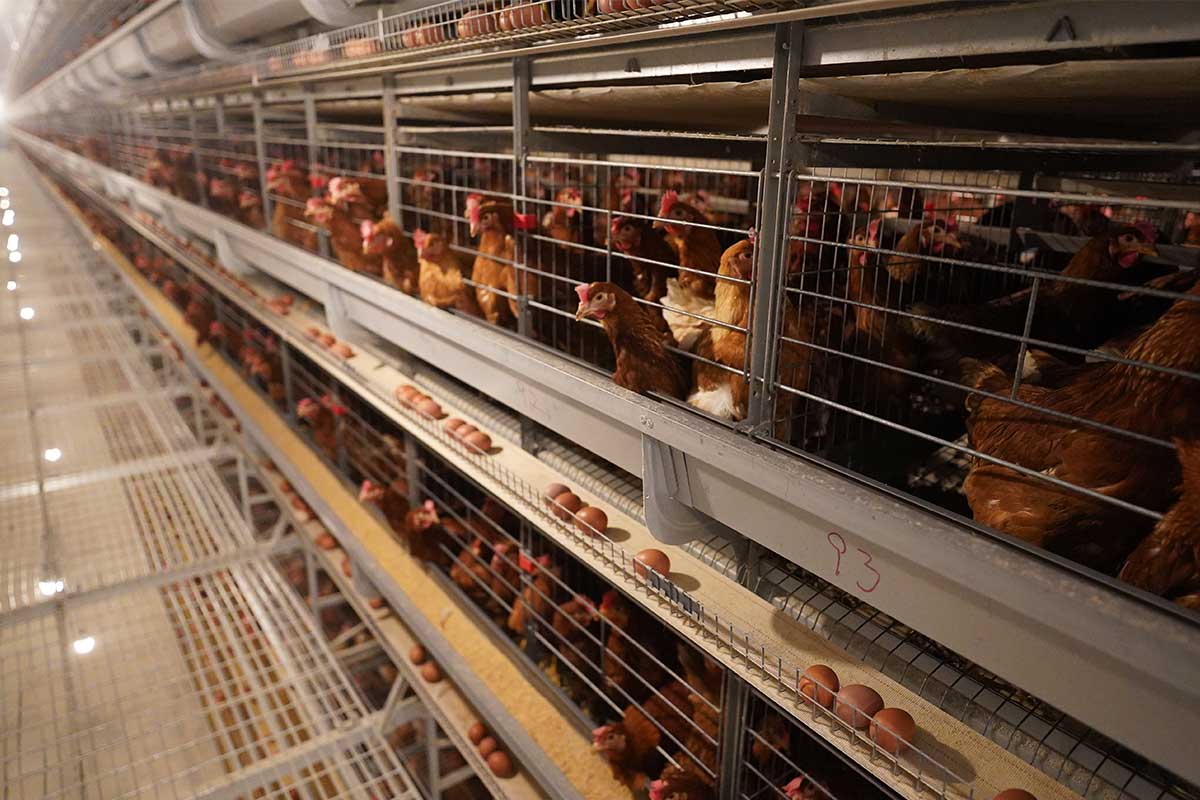
The H-shaped stacked automated chicken farming system features a high-density cage system with multiple layers stacked vertically. Unlike traditional stepped automated equipment, its cages are perfectly aligned and stacked vertically, forming a compact “H”-shaped frame. This design relies on a highly precise automated control system to complete the entire process, including feeding, watering, egg collection, manure removal, and environmental regulation. It represents the highest level of technology in layer chicken farming today.
Core Process: Hot-Dip Galvanizing and Superior Durability. Equipment durability is the cornerstone of investment returns. High-quality H-type stacking equipment generally utilizes hot-dip galvanizing (hot-dip galvanizing). This process involves immersing steel components in a high-temperature zinc bath, forming a dense, uniformly thick zinc-iron alloy layer on the surface.
Advantages: The hot-dip galvanizing layer is much thicker than conventional electroplating, providing exceptional corrosion and rust resistance, effectively resisting the corrosive environment of a poultry house, including humidity and ammonia.
Lifespan: Equipment using this process boasts exceptional durability, with a typical service life of 15-20 years, significantly reducing maintenance and replacement costs over the long term.
Five core advantages: Why is it the future trend?
Maximize space utilization and double production capacity: The equipment can be designed with multiple tiers, up to 8-10 tiers, significantly increasing stocking density per unit area. On the same land area, the breeding capacity can be multiplied compared to terraced or flat-bed systems. This makes it particularly suitable for large-scale farms with limited land resources and the pursuit of scale benefits.
Automatic feeding: The system delivers feed precisely and on time, ensuring even feeding among the chickens, saving feed and preventing waste.
Automatic drinking: The nipple-type drinking system ensures clean, fresh water, reducing the spread of disease.
Automatic light and temperature control: The integrated environmental control system provides the optimal growth and egg-laying environment for the chickens.
Automation frees up manual labor, allowing only one person to manage 10,000 chickens, significantly improving productivity.
Efficient egg collection ensures egg quality.
The automated egg collection system smoothly transports eggs to the egg collection platform in the operation room via a central egg conveyor. This process reduces breakage and contact contamination during manual egg collection, resulting in cleaner and more complete eggs, directly improving economic efficiency.
Automatic manure removal improves the indoor environment.
Each cage floor is equipped with a manure removal belt that can be set to automatically remove manure multiple times a day. Manure is promptly removed and centrally processed, keeping the henhouse dry and low in ammonia. This not only significantly reduces the incidence of respiratory diseases in the flock, but also improves the working environment for breeders and facilitates the resourceful utilization of manure.
Beneficial to biosafety and disease prevention and control.
The closed-loop management model of “people managing machines, machines raising chickens” reduces frequent personnel entry and exit of the henhouse and direct contact with the chickens. Centralized rearing and zoning effectively eliminates pathogen transmission pathways, laying the foundation for a comprehensive biosafety system and promoting the health and stability of the entire flock.
The H-shaped stacked automated chicken farming equipment is not only a production tool but also a vehicle for modern farming concepts. Through its advanced mechanical automation, intelligent design, and animal welfare-focused design, it brings unprecedented efficiency improvements and a management revolution to farmers. Despite the significant initial investment, the long-term benefits of labor savings, health protection, and increased production make it an indispensable investment for modern layer farms moving towards the future. Embracing technology and upgrading equipment are crucial steps to staying ahead in the fiercely competitive market.