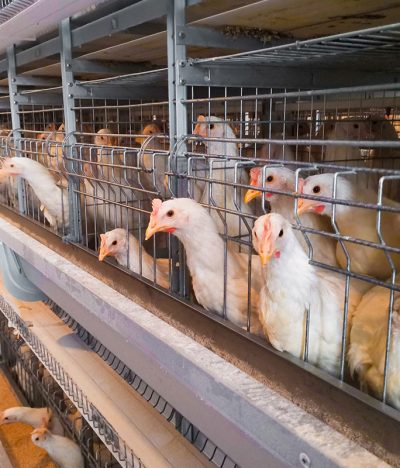
Manure Removal Efficiency Determines the Core Competitiveness of Large-scale Farms
I. Analysis of the Current Dilemmas of Traditional Mainstay Scraper Manure Cleaners
Scraper manure cleaners, with their simple structure and low initial investment, have long dominated the market. However, in large-scale practical applications, their drawbacks have become increasingly apparent, directly impacting livestock farming efficiency.

Four Core Defects and Production Risks:
Inefficiency and Drastic Environmental Fluctuations:
Slow scraping speed (typically only 2-3 meters/minute), resulting in long cleaning times.
This leads to a drastic deterioration of environmental indicators such as ammonia and humidity in the chicken house during scraping, causing continuous stress to the flock.
Incomplete Cleaning and Excessive Harmful Gases:
Scraping is ineffective for sticky feces or feces mixed with feathers from chicks.
The scraping process agitates the feces layer, accelerating fermentation and instantly releasing large amounts of toxic and harmful gases such as hydrogen sulfide and ammonia, threatening the respiratory health of the chickens.
Damage to the Feces Membrane, Deteriorating the House Environment:
In stacked chicken cages, the impact of falling feces from higher levels is significant, breaking the naturally formed dry feces membrane.
Scraping completely pulverizes the feces membrane structure, causing the complete release of moisture from the feces, greatly increasing humidity and ammonia concentration in the house, thereby reducing feed conversion rate and growth rate.
Significant safety hazards exist.
The steel wire rope and winch used for transmission are completely exposed, posing major mechanical safety hazards such as breakage and entanglement, which seriously endanger the safety of operators.
II. Modern Solution: Core Advantages of the Tracked (Conveyor Belt) Manure Removal System
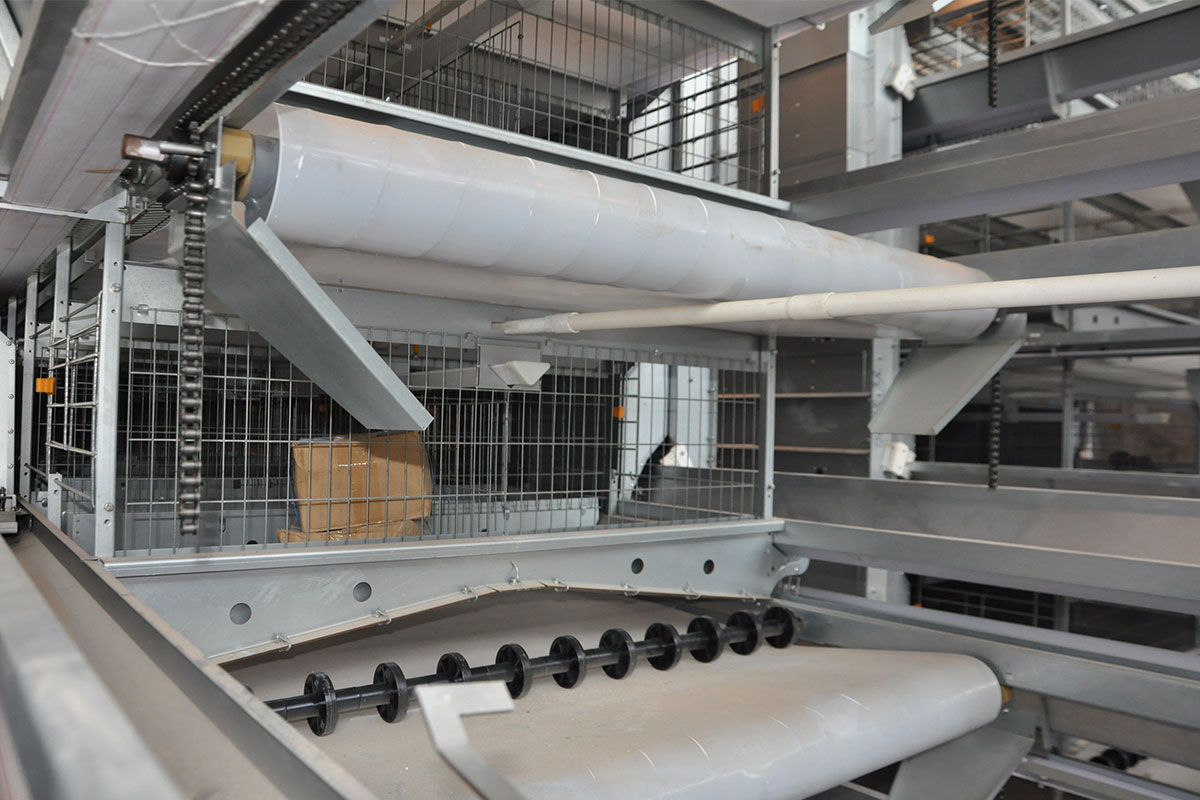
The tracked manure removal system is specifically designed for high-density, stacked cage-raised chicken houses. Through a closed-loop, dry manure removal process, it systematically solves the pain points of traditional methods.
Four Revolutionary Advantages and Enhanced Efficiency:
Creating a Stable and High-Quality Indoor Environment
Dry and Enclosed: Chicken manure falls onto a dry conveyor belt, isolated from the chicken’s activity area, effectively reducing the volatilization of harmful gases (ammonia concentration can be reduced by more than 70%).
Energy Saving and Efficiency Improvement: Thanks to the reduced gas concentration, forced ventilation volume can be relatively reduced, saving energy consumption and extending fan life. At the same time, a more stable temperature environment reduces the energy consumption for chickens to maintain their body temperature, directly improving production performance.
Excellent Manure Quality: The produced manure is relatively dry with low moisture content, greatly facilitating subsequent transportation, processing, and resource utilization (such as producing organic fertilizer, insect farming, etc.).
High-Performance Materials and Reliable Operation
The conveyor belt is made of high-strength PVC or composite polyethylene, which has the characteristics of being non-absorbent, non-deformable, and corrosion-resistant.
Using ultrasonic oblique welding technology, the belt body is ensured to be strong. The standard belt speed can reach 8-10 meters/minute, and the manure removal efficiency is more than 3 times that of scraper-type belts.
Modular Design and Intelligent Control
Vertical + Horizontal + Inclined Three-Stage Conveying System: Vertical manure removal belts are installed under each chicken cage, collecting manure at the end of the coop via a horizontal belt, and finally conveying it out of the coop via an inclined belt. The entire process is fully automated.
Centralized Control: The power and control system is centrally installed at the end of the coop, facilitating operation and maintenance, and enabling timed and quantitative manure removal.
Significant Overall Economic Benefits
Although the initial investment is higher than that of a scraper-type system, the added value it brings far exceeds the equipment price difference:
Energy Saving: Saves on ventilation and insulation energy costs.
Increased Production: Improves the environment and enhances flock production performance (feed conversion ratio, egg production rate).
Loss Reduction: Reduces the incidence of respiratory diseases and mortality rates.
Added Value: Dried chicken manure commands a higher selling price while having lower processing costs.
From "Cleanup" to "Value Creation": A Strategic Upgrade
For large-scale poultry farms aiming for long-term development, the selection of manure removal equipment has transformed from a cost expenditure into a strategic investment impacting biosecurity, production efficiency, and environmental compliance. Tracked manure removal systems, with their dry, enclosed, and efficient characteristics, not only solve the fundamental problems of the chicken coop environment but also transform chicken manure into an easily manageable resource, achieving a shift from “pollution control” to “value creation.”
Upgrade Recommendation: For farms still using scraper manure removers and limited by their drawbacks, converting to tracked systems is a crucial step in breaking through development bottlenecks. Actual application data shows that after the upgrade, flock production performance steadily improves, resulting in substantial overall economic benefits. Farmers are advised to conduct detailed return on investment analysis based on overall farm planning, decisively embrace technological upgrades, and move towards a new stage of efficient, environmentally friendly, and profitable modern poultry farming.