Q&A with a 400,000-Bird Layer Farm Manager
Project Overview:
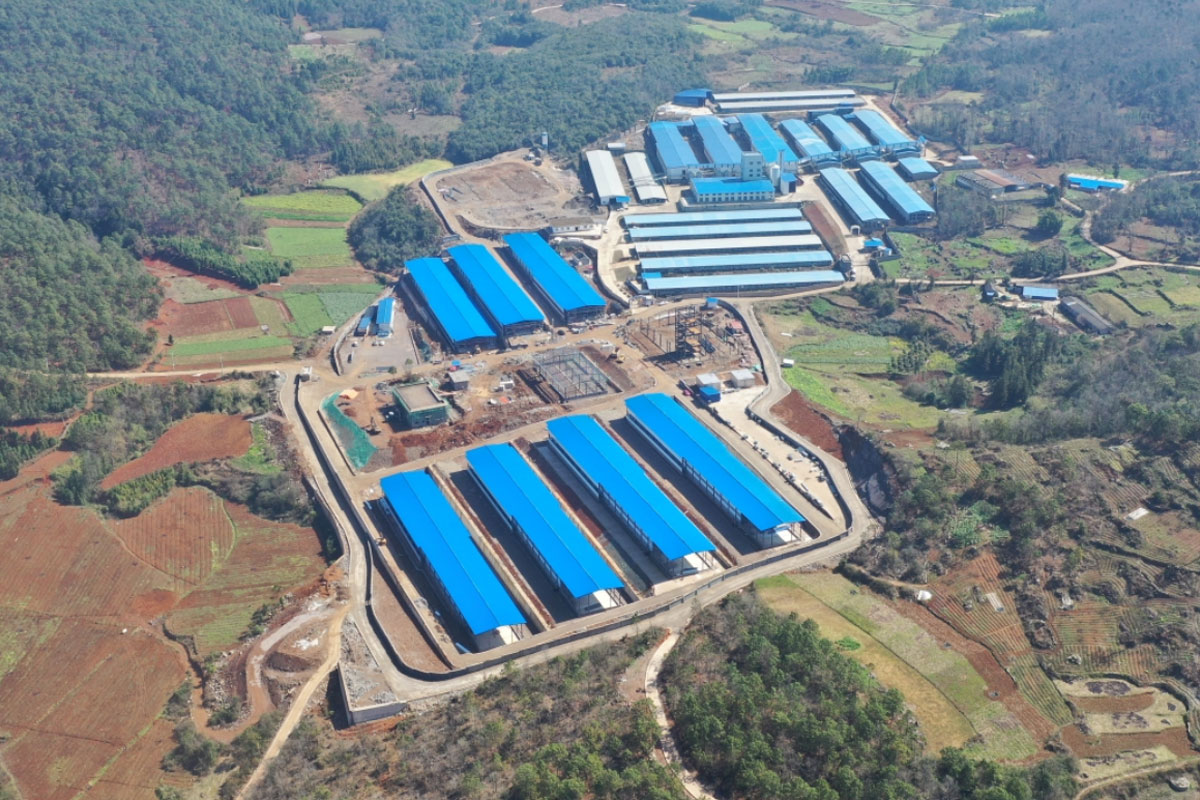
In the summer of 2023, the first phase of a modern, large-scale egg production facility was commissioned. This state-of-the-art farm currently houses 400,000 laying hens across multiple houses, with a single barn capacity of 100,800 birds. We sat down with the farm manager to discuss daily operations, performance data, and the impact of integrated automation systems.
Q&A Session
Q: Can you give us an overview of the current production situation?
A: We operate a fully enclosed housing system. Our current total stocking capacity is 400,000 birds, and we are steadily increasing production according to our plans. Throughout this process, we’ve worked closely with our equipment suppliers to achieve excellent results.
Q: What is the age and peak performance of your flock?
A: We raise the Lohmann Brown breed. Our oldest flock is currently 460 days old, maintaining a lay rate of 88%. At peak performance, our 230-day-old flocks can achieve a 95% lay rate.
Q: As the manager of a 400,000-bird farm, what are your primary responsibilities?
A: My role focuses on two main areas. First, overall production planning and coordination for the entire site. Second, I oversee divisional management, which includes everything from flock feeding and health management to backend services like egg collection, manure handling, and disease control protocols.
Q: What are your impressions of the equipment used in farm management?
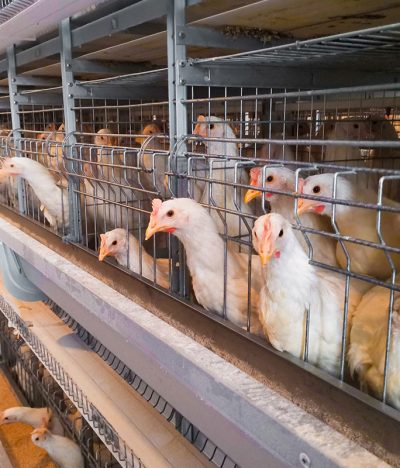
A: The environmental control system from Poultech has been a significant advantage. First, it has completely shifted us away from traditional tunnel ventilation to a more advanced circulation-based model, which is excellent. Second, the build quality of the equipment is outstanding. Our hens weigh around 2 kg, and the cage floor mesh still shows remarkable resilience and bounce. Third, the level of interaction and control we have with the system provides a real sense of superiority in management.
Q: What is the current Feed Conversion Ratio (FCR) for your flocks?
A: Looking at a combined average across flocks—from 200-day-old to 460-day-old birds—our overall FCR is approximately 1.95:1.
Q: The first phase houses 420,000 birds with single barns of 100,000. How many people are needed to manage one barn?
A: We operate on a one-person, one-house management model. This is possible because all major tasks within the house—feeding, watering, climate control, and egg collection—are handled by automated systems. This model not only makes the workload manageable for a single operator but also strengthens individual accountability and dedication to that specific flock.
Q: How has the manure drying system at the end of the house performed?
A: It’s running very well. Each house is equipped with an intelligent manure drying system capable of processing the output from 100,000 birds. It has transformed our farm environment. The dried manure is repurposed as organic fertilizer, which is in high demand for crop cultivation. We produce about 3 metric tons of dried manure per day, which is typically processed and handled within the same day. This by-product represents an additional revenue stream for the farm.
This interview highlights the core drivers of modern, large-scale egg production: high-yield genetics, precision environmental control, and comprehensive automation. The combination of robust equipment—from climate systems to durable housing and efficient manure processing—enables remarkable management efficiency, as demonstrated by the one-person-per-barn model. The excellent production data, including a peak lay rate of 95% and a strong overall FCR, underscores how integrated technology and skilled management directly translate into operational success and sustainability.