Three Main Uses of Dried Chicken Manure
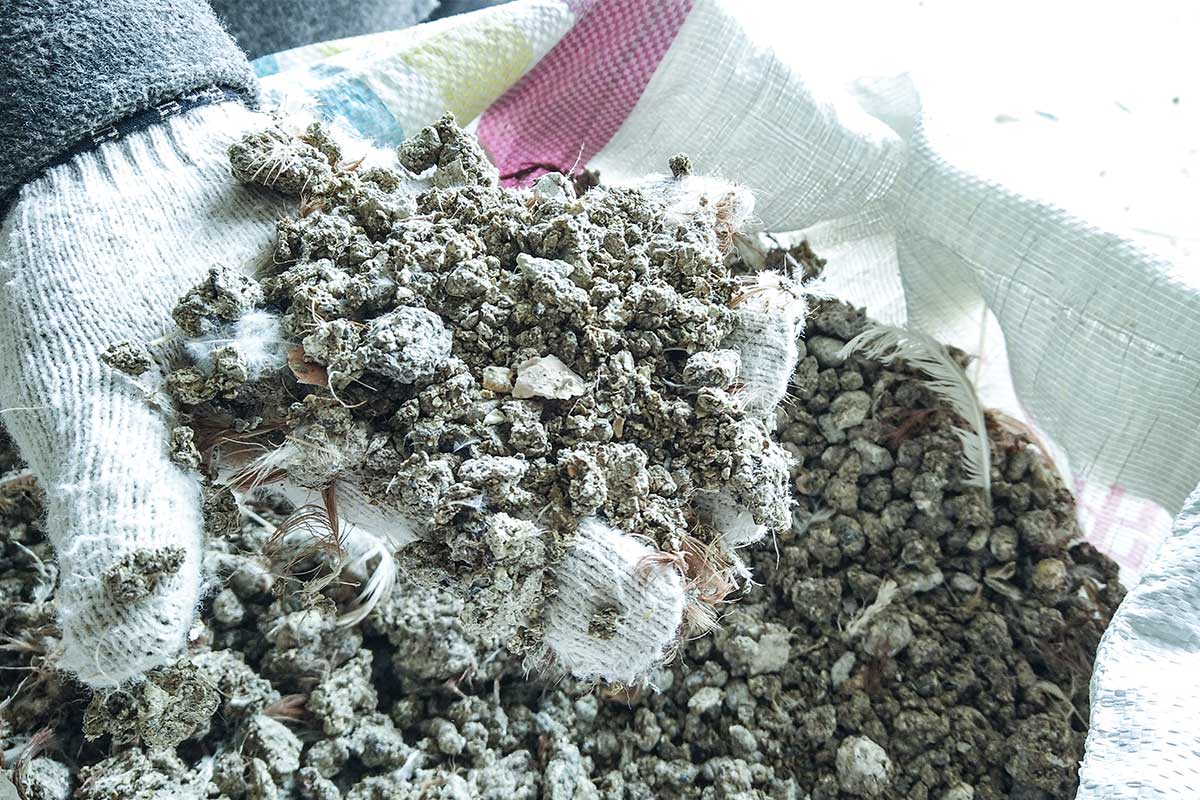
Processed dried chicken manure is no longer a headache-inducing livestock waste, but a valuable resource product. Dried chicken manure is rich in organic matter and nutrients. According to Baidu Encyclopedia, the organic matter content of dried chicken manure can reach 65%, crude protein is about 30%, and the total nitrogen, phosphorus, and potassium content is around 8%. These characteristics determine that dried chicken manure has broad utilization prospects in agriculture, energy, and other fields. This article will detail the three core uses of dried chicken manure and, combined with the latest industry practices, provide a comprehensive analysis of how to maximize its value.
I. High-Quality Crop Fertilizer: Soil Improvement and Nutrient Provision
The most traditional and primary use of dried chicken manure is as crop fertilizer, mainly for two reasons:
1. Significantly Improves Soil Structure
Dried chicken manure is rich in organic matter. Applying it to the soil can significantly increase soil organic matter content and improve the soil’s physical, chemical, and biological properties. Research from the Xinjiang Academy of Agricultural Sciences shows that applying 400 kg of chicken manure per mu (approximately 0.067 hectares) of organic fertilizer reduced soil bulk density from 1.65 to 1.46, demonstrating excellent soil improvement effects. This means the soil becomes looser and more aerated, enhancing its water and fertilizer retention capacity, which is beneficial for crop root growth and development.
Applying bio-organic fertilizer can loosen the soil (making sandy soil more clayey and clay more sandy), improve soil aggregate structure, and enhance the soil’s water and fertilizer retention capacity. Choosing the right type of chicken manure based on soil type is also important: For sandy greenhouses, sticky chicken manure (pure chicken manure) should be used because its high organic matter content effectively improves sandy soil prone to nutrient and water loss; for clay soils, sandy chicken manure with a higher sand content should be used to increase soil aeration.
2. Comprehensive Crop Nutrient Provision
Dried chicken manure contains various nutrients necessary for plant growth, such as nitrogen, phosphorus, and potassium, providing comprehensive nutrition for crops, promoting growth and increasing yield. In a practice involving thousands of acres of cotton fields in Manas County, cotton fertilized with chicken manure showed significantly better growth than in previous years, with more and larger bolls. Cotton fields using organic fertilizer saw an increase in yield of 40 to 50 kg per acre, resulting in an increase of 350 yuan per acre for cotton farmers.
Dried chicken manure can be used as a high-quality base fertilizer when planting vegetables, fruits, and flowers. Vegetables and fruits fertilized with farmyard manure, especially leafy greens, always taste better and sweeter than those fertilized with chemical fertilizers. This is because dried chicken manure can effectively improve the quality of agricultural products, reduce the accumulation of harmful substances, and enable agricultural products to meet the requirements of green food.
Fertilization Precautions
When applying dried chicken manure, it is essential to ensure it is fully decomposed. Directly returning it to the field can cause root burn in crops. High-temperature fermentation can transform large organic molecules into amino acids and monosaccharides that are easily absorbed by plants. Adding live microorganisms further enhances the effect.
II. Animal Feed Supplementation: Expanding the Utilization of Resources
Dried chicken manure, after proper treatment, can be used as a feed supplement for ruminants. Chicken manure contains a certain amount of protein, amino acids, and other nutrients. Through reasonable processing and formulation, it can become a supplementary feed for animals such as cattle and sheep, effectively reducing breeding costs.
Practice shows that through advanced microbial animal feed protein technology, dried chicken manure has gained new uses. A black soldier fly larvae project converting organic waste into feed protein processes 20 tons of chicken manure per day, achieving a 100% utilization rate. The cultivated feed protein can fetch over 8,000 RMB per ton. This proves that the nutrients in chicken manure are suitable for producing feed protein, achieving a higher added value conversion.
In terms of academic research, there are also related studies such as “The Effect of Fermented Dried Chicken Manure as a Substitute for Concentrate Feed in Fattening Sheep” and “Experiment with Feeding Pigs with Dried Chicken Manure,” providing theoretical support for the application of dried chicken manure as feed.
Precautions for Use
When using chicken manure as feed, the following points should be noted:
Source Safety: Ensure the chicken manure is free of drug residues and pathogen contamination.
Treatment Thorough: It must undergo thorough disinfection and fermentation.
Proportion Control: Strictly control the proportion added to the diet; it should not be used as a primary feed source
III. Biomass Energy: A New Source of Clean Energy
Dried chicken manure, as a raw material for biomass energy, is showing great potential. Currently, there are two main applications:
1. Biomass Power Generation
In some areas, dried chicken manure can be mixed with other biomass fuels for biomass power generation. This not only effectively utilizes chicken manure resources but also generates clean energy, reducing dependence on traditional fossil fuels and offering significant environmental and economic benefits.
The innovative practice in Donggang, Liaoning Province, is noteworthy: The local area utilizes the heat generated from waste incineration power generation, combined with Tsinghua University’s pioneering “hydrothermal pyrolysis fertilizer production technology,” to transform chicken manure, straw, and other agricultural and forestry residues into high-end organic fertilizer. This project can process over 60,000 tons of agricultural and forestry residues and livestock waste annually, producing 50,000 tons of high-end organic fertilizer, with an estimated annual output value of 46 million yuan. In this way, the heat energy from waste-to-energy power generation is effectively utilized, forming a complete energy-fertilizer cycle.
2. Biogas Production
A more cutting-edge application is the use of anaerobic fermentation technology to convert chicken manure into biogas. The Pusheng Biomass Energy Project in Pucheng County, Fujian Province, is currently the largest single-unit chicken manure-to-natural-gas project in China, with a total investment of 500 million yuan. It employs internationally leading anaerobic fermentation technology and can process over one million tons of organic waste, including chicken manure, annually.
This project uses anaerobic fermentation technology to convert organic waste such as chicken manure and slaughterhouse wastewater into clean and efficient biogas and organic fertilizer, achieving “turning waste into treasure.” After commissioning, it will be able to process 200 tons of chicken manure and 15,000 tons of slaughterhouse wastewater daily, producing approximately 40,000 cubic meters of biogas daily and over 70,000 tons of organic fertilizer annually.
The Huadian Project in Zhangwu, Liaoning Province, also uses anaerobic fermentation technology. Through core processes such as slurry preparation, mesophilic anaerobic fermentation, and solid-liquid separation, it converts livestock and poultry manure into three valuable products: biogas, biogas residue, and biogas slurry. The biogas is purified and upgraded into biogas; the biogas residue is recycled and burned to produce steam, which is directly supplied to the enterprise for energy; and the biogas slurry is returned to the fields as a high-quality fertilizer for soil improvement. Once the project reaches full production capacity, it can process an average of 160,000 tons of chicken manure and 20,000 tons of cow manure annually, and produce 70,000 tons of steam and 3 million cubic meters of biogas annually, with an estimated annual output value of 30 million yuan.
IV. Innovative Applications and New Trends of Dried Chicken Manure
With technological advancements, the utilization pathways of dried chicken manure are constantly expanding:
Crop-Livestock Cycle Model
Many farms are integrating chicken manure treatment with crop cultivation, forming a circular economy model of “livestock farming – manure – organic fertilizer – crop cultivation.” Family farms in Neijiang, Sichuan, have established chicken manure drying facilities, converting chicken manure into organic fertilizer for orchard production, solving the chicken manure disposal problem and opening up new income channels. Egg-laying chicken farms in Nayong County, Guizhou, also process chicken manure into organic fertilizer, achieving both harmless treatment and resource reuse of chicken manure, while significantly reducing environmental pollution from livestock farming.
High-Value Utilization
Practice in Xinzhou District, Wuhan, demonstrates multiple possibilities for the high-value utilization of chicken manure: some chicken manure is processed into high-quality organic fertilizer through “dry anaerobic fermentation”; another portion, along with other organic waste, undergoes “two-phase anaerobic fermentation” to convert it into clean biogas for farmers; and some is converted into high-value feed protein through black soldier fly larvae. This diversified utilization model has turned the former “pollution burden” into “real money”.
V. Selection Recommendations
Faced with multiple utilization pathways, how to choose the most suitable solution? The following points can be used as a reference:
Nearby planting bases: Prioritize using it as organic fertilizer for nearby fields, achieving integrated crop and livestock farming.
Large-scale livestock farming: Consider cooperating with energy companies to use chicken manure as a biomass energy feedstock.
Pursuing high added value: Explore bioconversion pathways such as black soldier fly farming to produce high-value feed protein.
Regional collaborative development: Pay attention to whether there are biomass power generation or natural gas projects to form industrial synergy.
Dried chicken manure has been upgraded from traditional “farmyard manure” to a multifunctional resource-based product. Whether used as high-quality organic fertilizer to improve soil, as a feed supplement to reduce breeding costs, or as a biomass energy source to produce clean energy, dried chicken manure demonstrates enormous application value. With technological advancements and industry maturity, the resource utilization pathways of dried chicken manure will become more diversified, contributing even more to the development of circular agriculture and the achievement of “dual carbon” goals.