Automated Egg Collection Machine – An Essential for Modern Farms
In modern egg-laying hen farming, egg collection efficiency and egg breakage rate directly impact economic benefits. PoulTech’s egg collection machine integrates multiple advanced technologies, encompassing its core structure, transmission system, operating parameters, and user-friendly design, helping farms achieve an efficient, low-loss, and clean automated egg collection process.
I. Flexible and Diverse Egg Collection Methods
This equipment supports multiple mainstream egg collection modes to meet the needs of different chicken house layouts:
Lift-type egg collection: Suitable for multi-layer cage systems, eggs are smoothly lifted to the central conveyor belt.
Korean-style egg collector: Compact structure, suitable for common Asian farming models.
C-claw egg collector: Gentle grip, reducing egg collisions.
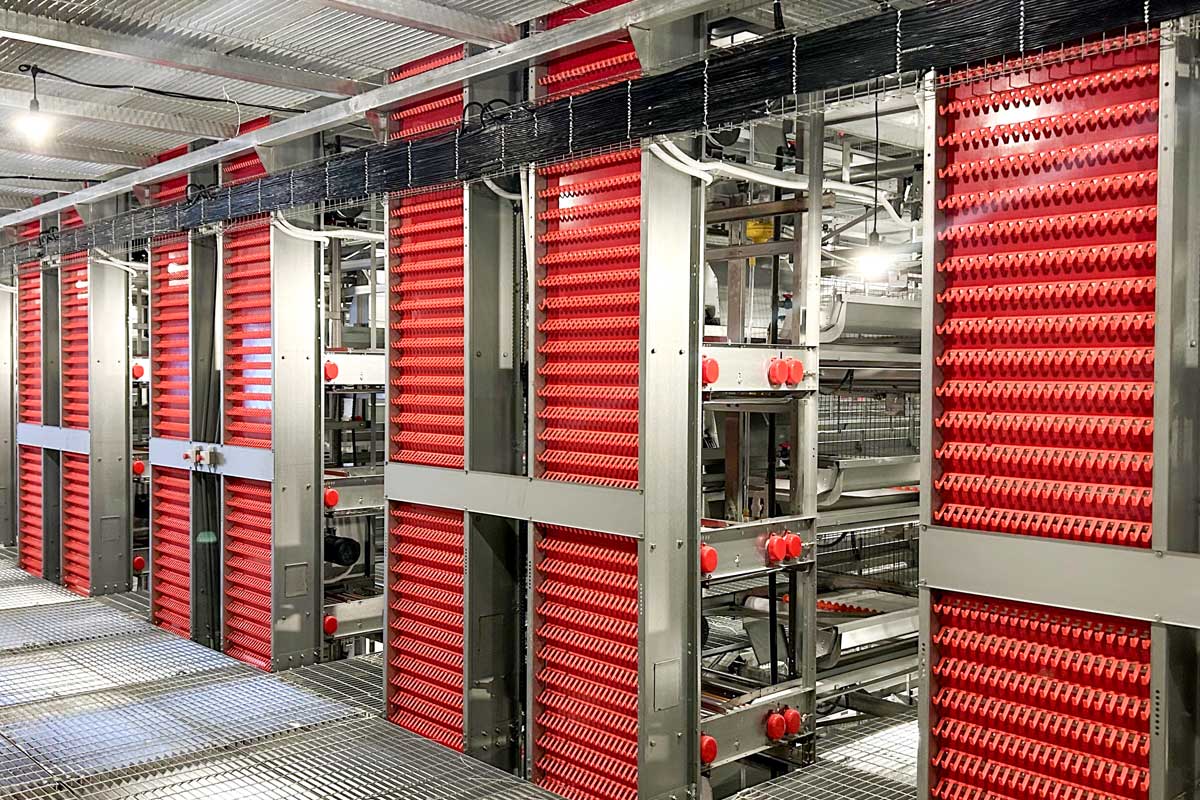
Red claw egg collector: Specially made claw blades, durable and eggshell-friendly.
Users can choose the most suitable egg collection method based on actual egg production and chicken house size.
II. Stable and reliable transmission system
The equipment’s power and transmission systems use components from well-known brands to ensure stability during long-term continuous operation.
| Components | Functions |
| Lifting motor | Drives the lifting mechanism for smooth egg transport |
| Gear reducer | Matches the rotation speed to increase torque |
| Egg claw motor for egg collector | Drives the cyclic movement of the egg claws |
| Egg belt motor | Drives the lateral transport of the egg conveyor belt |
III. Precise Operating Speed Design
To achieve the optimal balance between conveying efficiency and egg safety, the equipment is pre-set with a scientifically designed speed range:
Egg Collection Speed: 4m – 4.5m per minute
Ensuring eggs are smoothly lifted from the lower level to the higher level, avoiding collisions caused by excessive speed.
Egg Collection Belt Speed: 1.79m – 1.8m per minute
Low-speed conveying further reduces friction between eggs, suitable for integration with manual egg collection or automated packaging lines.
The speed can be steplessly adjusted according to actual egg flow, flexibly responding to peak egg production periods.
IV. High-Specification Frame and Side Panels
The robustness of the equipment directly affects its long-term performance:
Frame Material: 275g/㎡ hot-dip galvanized sheet. Highly corrosion-resistant, suitable for high-humidity, ammonia-rich environments in poultry houses, with a service life of over 10 years.
Egg Collector Side Panels: δ=2mm hot-dip galvanized steel sheet, stamped and bent.
The one-piece molding process ensures the rigidity of the side panels, preventing deformation, while providing smooth, burr-free edges to protect eggs and operators.
V. Core Components: Egg Collector Claws and Claw Belt
The egg collector claws are the components that come into direct contact with the eggs, making their design crucial:
Egg Collector Claw Material: Nylon + Fiberglass Injection Molding
High strength, self-lubricating, anti-aging, and with a flexible surface that won’t damage eggshells.
Egg Claw Material: PVC
Utilizes a screw tensioning structure, allowing for periodic adjustment of tension to ensure smooth operation and prevent egg drop.
Connection Process: Nickel-plated copper male-female rivet connection (optional)
This riveting method is stronger than ordinary plastic rivets, corrosion-resistant, and will not loosen over long-term use. Customers can choose whether to install this feature based on their budget.
VI. Complete Broken/Soft Egg Separation Device
During egg collection, soft or broken eggs are inevitable. If these are mixed into the finished product, it will severely affect the quality.
This equipment features a dual separation mechanism:
Soft/Broken Egg Separation Device: Utilizing the lighter weight and fluidity of soft/broken eggs, this device automatically diverts them to a waste trough before they enter the main conveyor belt.
Soft Egg Diversion Device: This device filters the egg liquid from soft and broken eggs, preventing contamination of other eggs.
Core Advantage: This device can also adjust the position of the egg collector on the eggs, allowing them to enter the equipment in a more dispersed manner, significantly reducing collisions between eggs and lowering the rate of cracked eggs.
VII. Egg Buffering and Dust Removal
Detailed design reflects a pursuit of quality:
Collection Tray Buffer Pad
When eggs fall from the egg catcher into the collection tray, the elastic buffer pad absorbs the impact of the fall, preventing the eggs at the bottom from cracking.
Egg Catch: Hot-dip galvanized steel wire welding + powder coating treatment
Double rust protection, and the smooth powder coating layer avoids scratching the eggs.
Egg Cart Dust Removal System
Includes brushes + dust collection plates: The brushes continuously sweep away feed powder, dust, etc., adhering to the surface of the egg cart. The dust is guided by the dust collection plate and falls directly into the lower manure removal belt, where it is removed from the coop along with the chicken manure.
Key Advantage: Prevents dust from falling into the lower feed troughs, avoiding feed contamination and maintaining the health of the flock.