How Do the Design of Cages and Frames Affect Breeding Efficiency?
I. Cage Netting: The First Line of Defense for Hen Comfort and Egg Production Efficiency
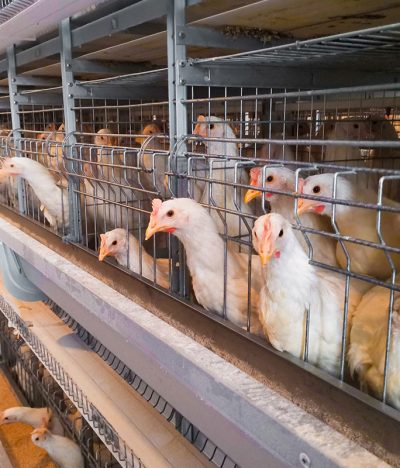
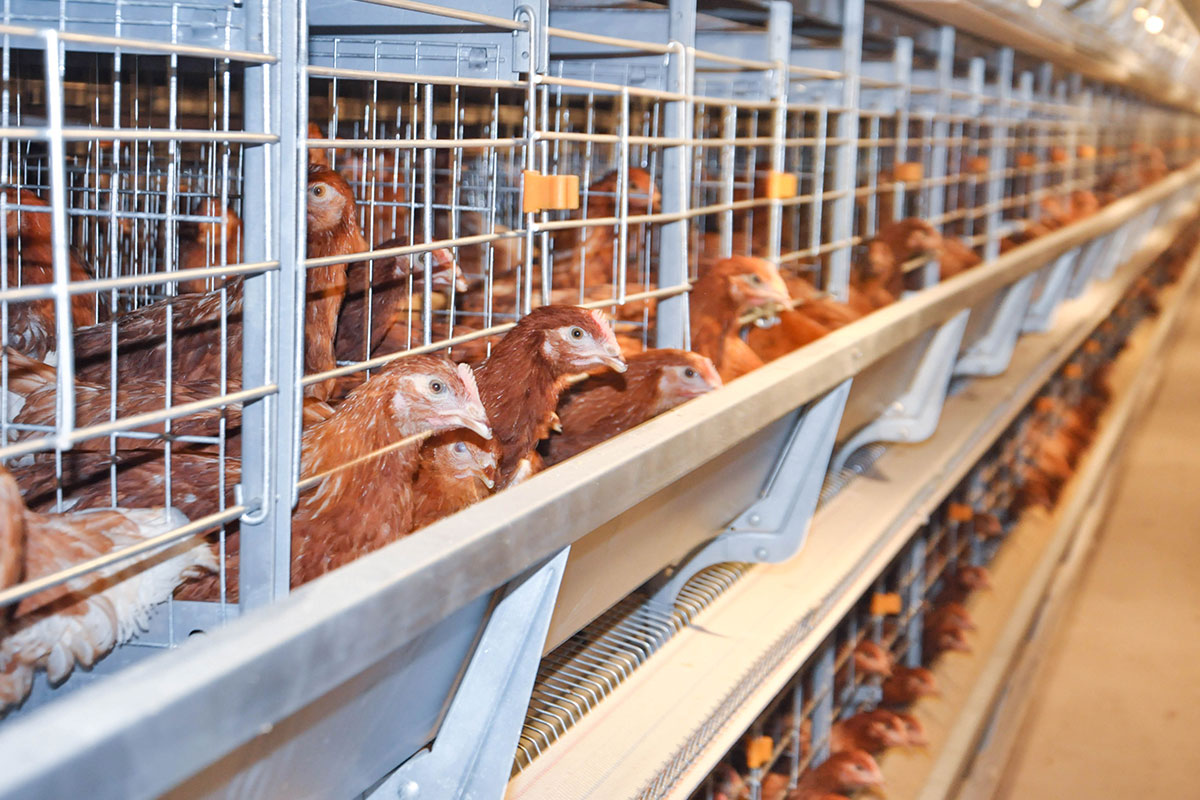
Cage netting is the living space directly in contact with laying hens. Its material, wire diameter, mesh density, and surface treatment directly affect the welfare and production performance of the hens.
1. Material and Wire Diameter Selection
High-quality cage netting often uses premium Q235 low-carbon cold-drawn steel wire, characterized by good toughness and high tensile strength. Common wire diameters range from 2.5mm to 3.0mm:
Front Netting (Feeding Side): Usually uses a thicker wire diameter (2.8-3.0mm) to resist the impact of pecking.
Bottom Netting (Load-Bearing Surface): Requires higher standards, often using a 3.0mm wire diameter with added knurled bumps. This supports the weight of the hens and prevents eggs from rolling too quickly and breaking.
2. Mesh Density and Anti-Peck Design
A reasonable mesh spacing (generally 25mm×50mm or 25mm×60mm) prevents the hens’ heads from sticking out and getting stuck, while also preventing hens in adjacent cages from pecking at each other. High-quality cage netting includes an anti-pecking baffle on the front mesh, significantly reducing the incidence of pecking and minimizing mortality losses.
3. Surface Anti-corrosion Process
Due to prolonged exposure to damp, polluted, and corrosive environments from disinfectants, the corrosion resistance of cage netting is crucial:
* Cold galvanizing: Low cost, but poor corrosion resistance; gradually being phased out.
* Hot-dip galvanizing: The mainstream process; coating thickness ≥40μm; service life 10-15 years.
* Stainless steel cage netting: A high-end choice; service life exceeding 20 years; suitable for high humidity or coastal aquaculture farms.
4. Bottom Mesh Slope and Egg Guard Plate
The bottom mesh should maintain a 7°-9° incline, combined with an arc-shaped egg guard plate (or egg-carrying baffle) installed under the front mesh. This design allows eggs to slide smoothly onto the egg collection belt after rolling out, effectively reducing breakage rates. Verification shows that the optimized cage netting structure can control the egg breakage rate to below 0.5%.
II. Cage Frame: The Skeleton Support System of the Entire Chicken House
If the cage mesh is the “skin,” then the cage frame is the “skeleton.” The cage frame bears the weight of all cage layers, chickens, feed, and manure removal equipment; its stability determines the safety of the entire system.
1. Structural Mechanics of Uprights and Beams
Modern stacked layer hen cage systems generally adopt a full-frame structure:
Uprights: Mostly made of 50×50mm or 60×40mm rectangular hot-dip galvanized square tubing, with a wall thickness ≥2.5mm. Each upright is equipped with anchor bolts to ensure earthquake and sway resistance.
Beams: Made of C-shaped or U-shaped cold-formed steel, connecting each row of cages to form an overall truss structure. Multi-layer systems (such as 4-layer, 6-layer, or even 8-layer systems) require additional diagonal bracing to prevent longitudinal deformation.
2. Connectors and Weld-Free Design
Traditional equipment uses welded connections, which are prone to rusting and stress concentration leading to breakage. Modern high-quality equipment extensively utilizes a modular design with cast connectors and high-strength bolts: On-site assembly requires no welding, avoiding thermal deformation.
The galvanized layer remains intact, improving corrosion resistance by 30%.
Later maintenance allows for individual replacement of vertical or horizontal beams, significantly reducing maintenance costs.
3. Load-bearing capacity verification
When purchasing, farmers should request a cage frame load test report from the manufacturer. The passing standard is: a single cage frame (taking 2.4m long, 3 rows, 4 layers as an example) with a static load-bearing capacity ≥2000kg and deformation <2mm/m. It is recommended to allow a 20% safety margin to accommodate chicken weight gain and vibration from the manure removal system.
4. Space reserved for manure removal and ventilation
Cage frame design should not only consider strength but also the path of the longitudinal manure removal belt and lateral ventilation airflow. A good design will leave at least 150mm of clearance at the bottom of the cage frame to facilitate the installation of a conveyor belt manure removal machine and prevent manure accumulation in dead corners, thus avoiding ammonia gas generation.
III. Cage Net + Cage Frame: Synergistic Effect Determines Overall Equipment Lifespan
The cage net and cage frame are not isolated entities; they are precisely fitted together through accessories such as hanging plates, clips, and brackets. A common design flaw is that the cage net and cage frame use galvanizing processes from different batches or manufacturers, leading to accelerated electrochemical corrosion. Therefore, it is recommended to choose an integrated solution with overall galvanization from the same manufacturer.
In addition, daily management should pay attention to the following:
Check the cage net weekly for any broken or protruding wires (to prevent scratching the chickens’ abdomens or puncturing eggs).
Tighten the cage frame connecting bolts quarterly (to prevent loosening that could cause noise or shaking).
Measure the verticality of the cage frame annually (if the tilt exceeds 5mm/m, it needs immediate reinforcement).
The cage net and cage frame of layer hen cage farming equipment are like the skin and bones of the human body, directly determining the health of the chickens, egg quality, and farming efficiency. In the context of increasing environmental pressure and rising feed costs, investing in corrosion-resistant, high-strength, and scientifically designed cage systems is a rational choice to enhance the core competitiveness of farms.