Advantages of Vertical Cage Rearing Technology for Broilers
Vertical cage-rearing technology for broilers (multi-tier cage systems) is profoundly reshaping traditional farming models through the synergy of spatial reconfiguration and intelligent management.
Utilizing modular cage structures of three or more tiers, this technology integrates three core systems—precise environmental control, automated feeding management, and the resource utilization of manure—offering significant advantages in overcoming land constraints, alleviating labor pressures, and ensuring environmental compliance.
I. What is the vertical cage-rearing technology for broilers?
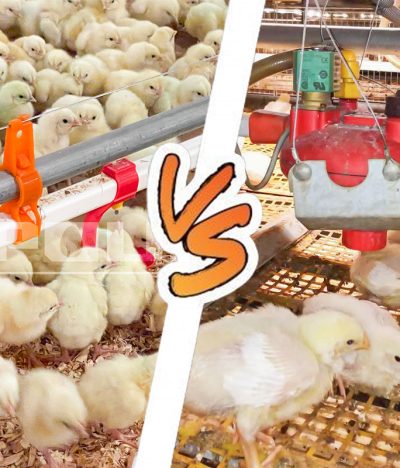
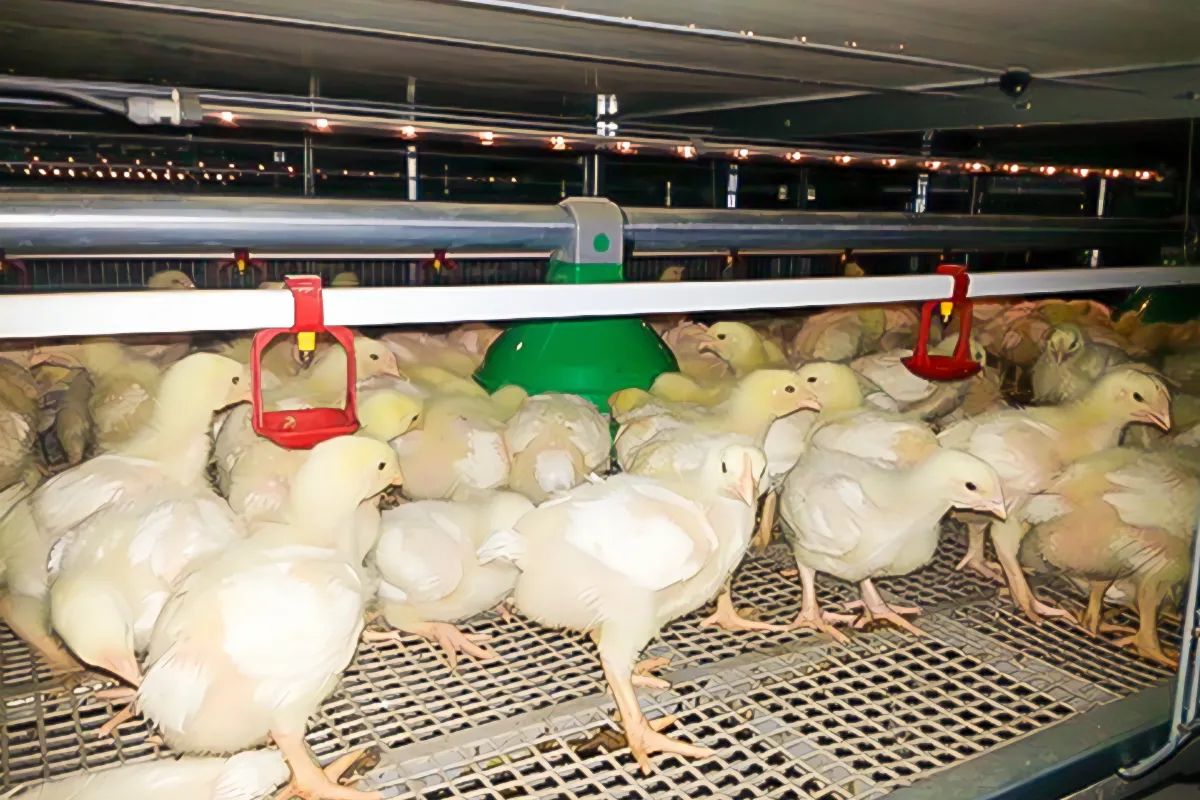
Vertical cage-rearing for broilers is a modern, intensive, and automated farming method. It utilizes multi-tiered cage structures to maximize space efficiency and integrates core systems—such as precise environmental control, automated feeding, and intelligent manure management—to significantly boost production efficiency, lower disease risks, and reduce environmental pollution.
This technology is particularly well-suited for large-scale farms, especially in regions facing land scarcity and high labor costs.
II. Five Key Technical Advantages of Vertical Cage Rearing for Broilers
1. Improved Space Utilization and Reduced Land Costs
Vertical cage rearing employs a 3- to 5-tier design, increasing the stocking capacity per unit area by 1.5 to 2 times compared to traditional floor-rearing methods and significantly raising stocking density. While maintaining the same production output, this approach effectively conserves land resources and lowers site leasing and construction costs, aligning with the modern trend toward efficient, intensive livestock farming.
2. Reduced Labor Costs and Enhanced Management Efficiency
The system features a highly automated design equipped with intelligent devices for feeding, watering, manure removal, and temperature control, drastically reducing the need for manual labor. A single attendant can manage three to five times as many birds. Centralized management enables real-time monitoring and precise regulation of environmental parameters, thereby reducing labor intensity while ensuring the standardization and controllability of the rearing process.
3. Improved Rearing Environment and Higher Survival Rates
The multi-tier vertical structure, combined with an intelligent ventilation system, ensures uniform airflow throughout the poultry house, keeping concentrations of ammonia and carbon dioxide within safe limits and significantly reducing dust levels. Automated temperature and humidity control systems minimize temperature fluctuations and stabilize humidity, creating a stable, comfortable environment for broiler growth. This optimized environment reduces stress and disease incidence among the flock, leading to higher overall survival rates.
4. Precision Feeding and Improved Feed Conversion Rates
Intelligent precision feeding systems utilize computer-controlled, quantitative dispensing units to automatically adjust feed quantity and frequency based on parameters such as the birds’ age and weight. This enables precise, on-demand feeding, which greatly minimizes feed waste. Coupled with uniform watering systems and scientific lighting management, the system ensures balanced nutrition for every bird. Refined feeding management effectively lowers the feed-to-meat ratio, reducing production costs while maintaining optimal growth rates.
5. Eco-friendliness and Sustainable Development
This model enables centralized manure and waste treatment. A fully enclosed waste collection system paired with automated conveyors achieves a centralized recovery rate of up to 95% for farming waste, significantly lowering the risk of environmental pollution. Integrated waste treatment facilities convert waste into organic fertilizer or biogas energy, achieving a resource utilization rate exceeding 80%. This eco-friendly farming model complies with national standards for pollutant emissions from livestock and poultry farming; it also reduces carbon emissions, putting the concept of green, low-carbon development into practice.
III. Six Key Technical Points for Vertical Cage Rearing of Broilers
1. Cage Design and Selection
Cage structures are constructed using high-strength galvanized steel or food-grade engineering plastics.
A modular design creates a 3- to 5-tier vertical layout, with the height of each tier controlled at 45–50 cm.
Cage floors feature a 12° sloped, slatted design with an anti-slip finish, ensuring automatic manure runoff without injuring the birds’ feet.
Each broiler is allocated a minimum activity space of 450 cm²; aisles of 80–100 cm are maintained between cage rows to facilitate mechanized operations and disease control.
2. Environmental Control System
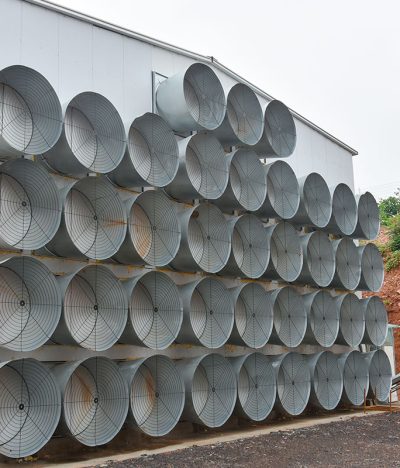
A combined “negative-pressure ventilation and sidewall air intake” mode is employed; intelligent variable-frequency fans and precision air inlets ensure uniform airflow across all tiers, eliminating ventilation dead zones.
An intelligent environmental controller automatically regulates temperature: 32–35°C during the brooding phase, gradually lowering to 20–25°C in the later stages.
Atomized humidification and dehumidification modules maintain relative humidity within the 60%–70% range.
The lighting system simulates natural photoperiods: 23 hours of light during brooding, gradually transitioning to 16 hours during the fattening phase; light intensity is intelligently regulated between 5 and 30 lux.
3. Automated Equipment Configuration
Fully automated feeding system: High-precision chain or auger-type feeders provide timed, quantitative feeding with an error rate controlled within 3%.
Nipple-type drinking system: Made of food-grade stainless steel and equipped with pressure regulators and anti-leak devices, it provides clean drinking water 24 hours a day, with a leakage rate reduced to below 0.5%.
Conveyor-belt manure removal system: Operates on a timed schedule (1–2 times daily); variable-frequency motors ensure smooth removal, while enclosed manure troughs prevent secondary pollution, reducing total system energy consumption by 40% compared to traditional methods. 4. Key Rearing and Management Practices
Brooding Phase (0–14 days): Specially designed paper liners are used in cages to ensure a constant temperature of 32–35°C and provide a non-slip surface, achieving a chick survival rate of over 99%.
Growth Phase (15–35 days): Automatic transition to a high-protein feed formula (21%–23% crude protein) combined with gradual lighting adjustments to promote skeletal and muscular development.
Fattening Phase (Day 36 to Market): Restricted lighting management (16 hours of light daily) to reduce activity levels, optimizing the feed conversion ratio to below 1.5:1.
Dynamic Stocking Density Control: Initial density of 50–60 birds/m² during early brooding, gradually adjusted to 20–30 birds/m² after three weeks to balance animal welfare with the maximization of cage space.
5. Health Monitoring and Disease Prevention
Implementation of an intelligent health monitoring system: High-definition cameras and AI image recognition analyze flock movement patterns, feeding behavior, and postural characteristics 24/7; the system provides early warnings for over 90% of anomalies up to 72 hours in advance, tripling management response speed.
Application of fully automated spray immunization equipment: Ensures uniform immunization across the entire poultry house in a short time, avoiding stress caused by handling birds and enhancing immunization efficacy.
Strict enforcement of biosecurity protocols: Disinfection of the poultry house (with birds present) twice weekly using rotating disinfectants; a four-step “clean-disinfect-dry-fallow” process is executed after each batch is sent to market, utilizing high-temperature, high-pressure washing equipment combined with broad-spectrum disinfectants. 6. Manure Treatment and Resource Utilization
After manure is centrally collected via an automated scraping system, a combined “solid-liquid separation + aerobic fermentation” process is employed.
The solid fraction is mixed with crop straw at a 1:3 ratio and undergoes high-temperature composting for 15 days, transforming it into organic fertilizer that meets the NY525 standard.
The liquid fraction is fed into anaerobic fermentation tanks to produce biogas, with a supporting combined heat and power (CHP) system to enhance energy self-sufficiency.
An intelligent monitoring platform adjusts the carbon-to-nitrogen ratio, moisture content, and pH value in real-time, shortening the organic fertilizer maturation cycle by 30%, increasing biogas yield by 25%, and achieving a comprehensive utilization rate of livestock waste exceeding 95%.
FAQ: Vertical Cage Rearing for Broilers
Q1: What scale of farm is suitable for vertical cage rearing of broilers?
A: It is suitable for large-scale farms, particularly those in regions with limited land resources and high labor costs. It is an ideal choice for farms with a capacity of over 10,000 birds that are planning to upgrade to intensive farming methods.
Q2: What are the primary advantages of vertical cage rearing compared to floor rearing?
A: Key advantages include high space utilization, high labor efficiency, reduced disease risk, and centralized manure management. Stocking density per unit area increases by 1.5 to 2 times, while the number of birds managed per attendant increases by 3 to 5 times.
Q3: What feed conversion ratio (FCR) can be achieved with vertical cage rearing?
A: Through precision feeding, scientific lighting management, and dynamic density control, the FCR during the fattening period can be optimized to below 1.5:1.
Q4: How is manure handled in cage-reared broiler systems?
A: A fully enclosed manure collection system combined with automated conveyors is used, achieving a centralized recovery rate of up to 95%. Through a “solid-liquid separation + aerobic fermentation” process, solids are converted into organic fertilizer and liquids into biogas, resulting in a resource utilization rate exceeding 80%.
Q5: What are the challenges in environmental control for vertical cage rearing?
A: The multi-layer vertical structure is prone to temperature differences between tiers and ventilation dead zones. An intelligent environmental control system with zoned management is required; this system monitors temperature by zone and adjusts air inlets, baffles, and the number of active fans to ensure a uniform environment across all tiers.
Multi-tier cage rearing technology for broilers achieves comprehensive improvements in production efficiency, biosecurity, and environmental performance through vertical farming, intelligent environmental control, and automated management. It not only significantly boosts yield per unit area and feed conversion rates but also effectively mitigates disease risks and environmental pollution via precise environmental control and manure treatment systems.
Driven by the deep integration of technologies such as the Internet of Things (IoT) and big data, multi-tier cage rearing will continue to propel the transformation and upgrading of broiler farming toward greater efficiency, intelligence, and sustainability. Future advancements—such as AI-based growth prediction, robotic inspections, and integrated crop-livestock circular systems—will further enhance the precision of broiler farming, providing vital support for the high-quality development of modern animal husbandry.