Chicken Cage Selection Guide for a 50,000-Chicken Farm
For large-scale chicken farms with a stock of up to 50,000 birds, choosing a chicken cage system is far more than simply purchasing equipment; it directly impacts the farm’s space efficiency, animal health, labor costs, and ultimately, the return on investment. In intensive farming, a suitable chicken cage system is the cornerstone of efficient production and scientific management. This article will analyze in depth the three mainstream chicken cage types best suited for large-scale chicken farms to help you make informed investment decisions.
Why is choosing the right chicken coop crucial for large-scale chicken farms?
For farms with 50,000 chickens, the coop must meet several core requirements: extremely high space utilization, controllable labor costs, convenient cleaning and maintenance processes, excellent egg production or growth performance, and long-term durability. Inappropriate selection can lead to frequent health problems and increased mortality rates, ultimately eroding profits.
Comparison of Three Mainstream Large-Scale Chicken Farm Cage Systems
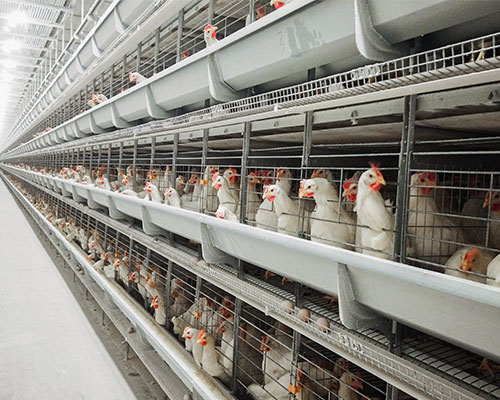
1. H-Type Stackable Cage: The First Choice for Automated and Efficient Production
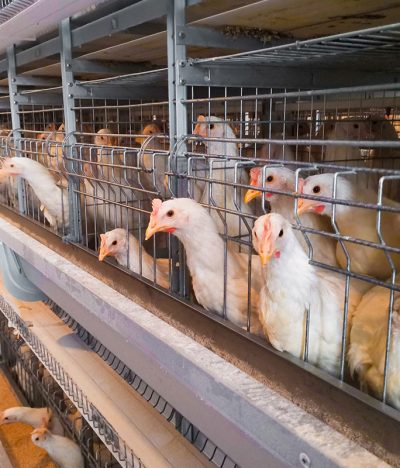
Core Features: Employs a 3-8 layer vertical stacking design, typically equipped with fully automated feeding, watering, manure removal, and egg collection systems. Robust structure, mostly constructed of galvanized steel.
Significant Advantages:
* Extremely High Space Utilization: Particularly suitable for areas with high land costs or limited space.
* High Automation: Significantly reduces reliance on manual labor, improving management precision and efficiency.
* Excellent Biosecurity: Timely separation of manure effectively reduces the risk of horizontal disease transmission.
* High Return on Investment: Although the initial investment is large, its consistently high productivity and low operating costs typically result in the best long-term returns.
Considerations: Requires significant initial capital investment and demands a certain level of electrical stability and operator skill.
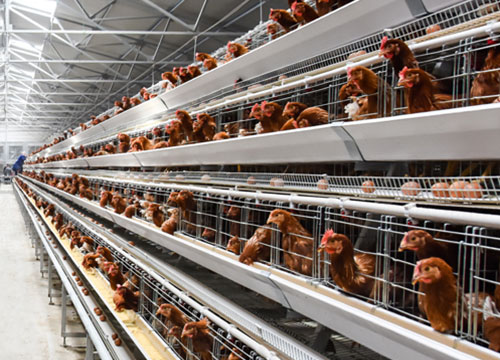
2. A-Type Tiered Chicken Cage: An Economical and Practical Balanced Choice
Key Features: Typically 2-4 tiers, the cages are arranged in an “A” shape, forming a natural tiered structure. Semi-automatic or manual feeding designs are commonly used.
Significant Advantages:
Relatively Moderate Cost: Lower initial investment than the H-type system, making it a good entry-level or transitional choice for many medium to large-scale layer farms.
Good Ventilation and Lighting: The tiered structure avoids complete cage overlap, promoting air circulation and even lighting within the chicken house.
Easy Maintenance: Relatively simple structure, making daily inspection and maintenance easier.
Considerations: Requires more land than the H-type cage, has a lower level of automation, and therefore requires a relatively higher labor force.
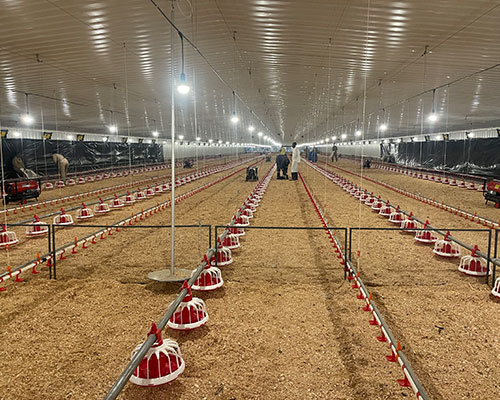
3. Deep Litter Floor Rearing System: Low-Cost Free-Range Model
Key Features: Cage-free rearing; chickens roam freely on littered floors, using conventional feed lines and waterers.
* Meets Animal Welfare Needs: Allows chickens to express more natural behaviors.
Major Challenges:
* High Management Difficulty: Monitoring the health of each chicken at a scale of 50,000 is exceptionally difficult.
* High Disease Risk: Feces mixed with litter easily breed bacteria and parasites, posing a high risk of disease transmission.
* Significant Feed Waste: Production efficiency is typically lower than cage-rearing systems.
System Comparison Overview
Features
H-type stacked cage rearing
A-type tiered cage rearing
Thick bedding floor rearing
Suitable Scale
★★★★★
★★★★
★★
Degree of Automation
★★★★★
★★
★
Health and Biosafety
★★★★★
★★★
★
Initial Investment Cost
★★
★★★★
★★★★★
Labor Requirements
★
★★
★★★★★
Long-Term Return on Investment
★★★★★
★★★★
★
For large-scale chicken farms with 50,000 chickens that are meticulously planned and prioritize high efficiency and long-term profitability, the H-type fully automated tiered cage system is undoubtedly the optimal solution. It maximizes economies of scale, achieves precise control through automation, ensures flock health and production performance, and ultimately delivers a higher return on investment.
If budget is limited, the A-type tiered cage system is a viable compromise, striking a balance between cost and efficiency. However, thick litter floor rearing systems typically face multiple challenges in management, disease control, and efficiency at such a large scale, and are generally not recommended unless there is a specific market positioning (such as a particular welfare egg brand).