Enclosed Chicken Houses are an Inevitable Choice for Modern Poultry Farming
Open-style chicken houses: A traditional choice and limitations for small-scale farming
Open-style chicken houses rely on natural ventilation and lighting, have relatively low construction costs, and provide chickens with an environment exposed to sunlight and fresh air. Therefore, they have long been the starting point for many small-scale family farms.
However, their inherent limitations are becoming increasingly apparent in the face of the demands of large-scale, intensive production:
Poor resilience: Difficult to effectively withstand extreme weather such as strong winds, heavy rains, extreme heat, and severe cold; chickens are prone to heat or cold stress.
Weak biosecurity: Cannot completely block carriers of pathogens such as wild birds, insects, and rodents, resulting in a high risk of disease introduction.
Weak environmental control: Internal temperature, humidity, and lighting are completely dependent on the external climate, fluctuating drastically, making it difficult to maintain the stable environment required for optimal chicken production.
Low management efficiency: Relies on manual adjustments, difficult to automate; the number of chickens managed per person is limited, and the workload for disease prevention and temperature control is high.
Enclosed Chicken Houses: High-Efficiency Production Systems in a Controlled Environment
Enclosed chicken houses create an “artificial climate” undisturbed by external factors through insulated walls, windowless design, and a mechanical environmental control system. Their core advantages are mainly reflected in the following five aspects:
1. Precise Environmental Control and Stable Production Performance:
The core value of enclosed chicken houses lies in their controllability. Through equipment such as fans, water curtains, heaters, and lighting, the temperature, humidity, ventilation, and lighting duration within the house can be precisely controlled, providing the flock with an optimal environment close to their physiological needs throughout the year. This stability is fundamental to ensuring flock health and maintaining high egg production rates or rapid and uniform growth.
2. Strong Biosecurity Barrier:
The fully enclosed structure physically isolates most external disease transmission vectors (such as wild birds and pests). Personnel and materials enter and exit through strict disinfection procedures, greatly reducing the risk of major epidemics such as avian influenza, creating conditions for implementing all-in, all-out, and batch management.
3. Effective Resistance to External Risks:
Not only can it mitigate the impact of extreme weather, but it can also effectively prevent theft and predation, providing comprehensive protection for poultry assets.
4. Laying the Foundation for Automated Integration:
A closed, controllable environment is a prerequisite for the efficient operation of automated equipment. Systems such as automatic feeding, watering, manure removal, egg collection, and environmental control can be seamlessly integrated, enabling one person to manage tens of thousands of chickens efficiently, significantly reducing labor intensity and labor costs.
5. Improving Resource Utilization and Stocking Density:
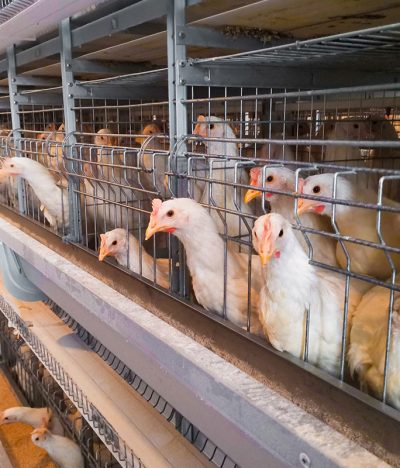
With precise environmental control, closed chicken houses can achieve higher stocking densities (such as using stacked cages), creating greater output on the same land area. Simultaneously, precise ventilation and temperature control reduce energy and feed consumption per kilogram of eggs or chicken meat.
A Wise Investment Towards Modern Farming
For farms pursuing sustainability, high efficiency, and controllable risk, enclosed chicken houses are no longer an “option,” but a “must-have.” Although the initial investment is higher than open-style chicken houses, the resulting improvements in production performance, reduced mortality, improved feed conversion rates, labor cost savings, and a leap in biosecurity levels are enough to bring substantial returns on investment in the short term.
Choosing an enclosed chicken house is essentially choosing a modern farming model driven by technology, managed by data, and surviving fluctuations with stability. For farms planning to upgrade or build new facilities, selecting a reliable equipment supplier for professional design and integration, based on their own funds and plans, is a crucial step towards success.