Location Selection for Laying Hen House Construction
In the egg-laying hen farming industry, site selection is the primary factor determining the success or failure of the operation. A scientifically sound and reasonable location for the chicken coop can not only reduce the risk of disease and increase egg production, but also reduce later operating costs. However, many farmers neglect the details of site selection, resulting in damaged flock health, low production efficiency, and even facing environmental penalties.
I. Topography and Terrain: High, Dry, and Flat Ground is Essential
1. High, Dry Terrain, Avoiding Waterlogging Risks
Laying hens are extremely sensitive to humidity. Damp environments easily lead to respiratory diseases, parasite breeding, and even structural corrosion of the chicken coop. Therefore, site selection should adhere to the following principles:
Avoid low-lying areas: such as valleys and riverbanks, which are prone to waterlogging, to prevent the chicken coop from being flooded during the rainy season;
Choose gently sloping land: The slope should ideally be controlled at 3%-5%, which facilitates drainage and prevents the accumulation of cold air in winter;
Measure the groundwater level: Ensure the groundwater level is lower than the depth of the chicken coop foundation (≥1.5 meters) to prevent groundwater seepage.
2. Open terrain, excellent ventilation and lighting
Avoid enclosed terrain such as mountain valleys and canyons to prevent excessive ammonia concentrations due to summer heat and winter stagnation;
Prioritize flat areas: Facilitates chicken house layout, equipment installation, and daily management, reducing construction costs;
Sufficient sunlight: Avoid tall buildings or trees blocking sunlight, ensuring natural light meets the flock’s needs (artificial lighting is required to 16-18 hours/day during the brooding period).
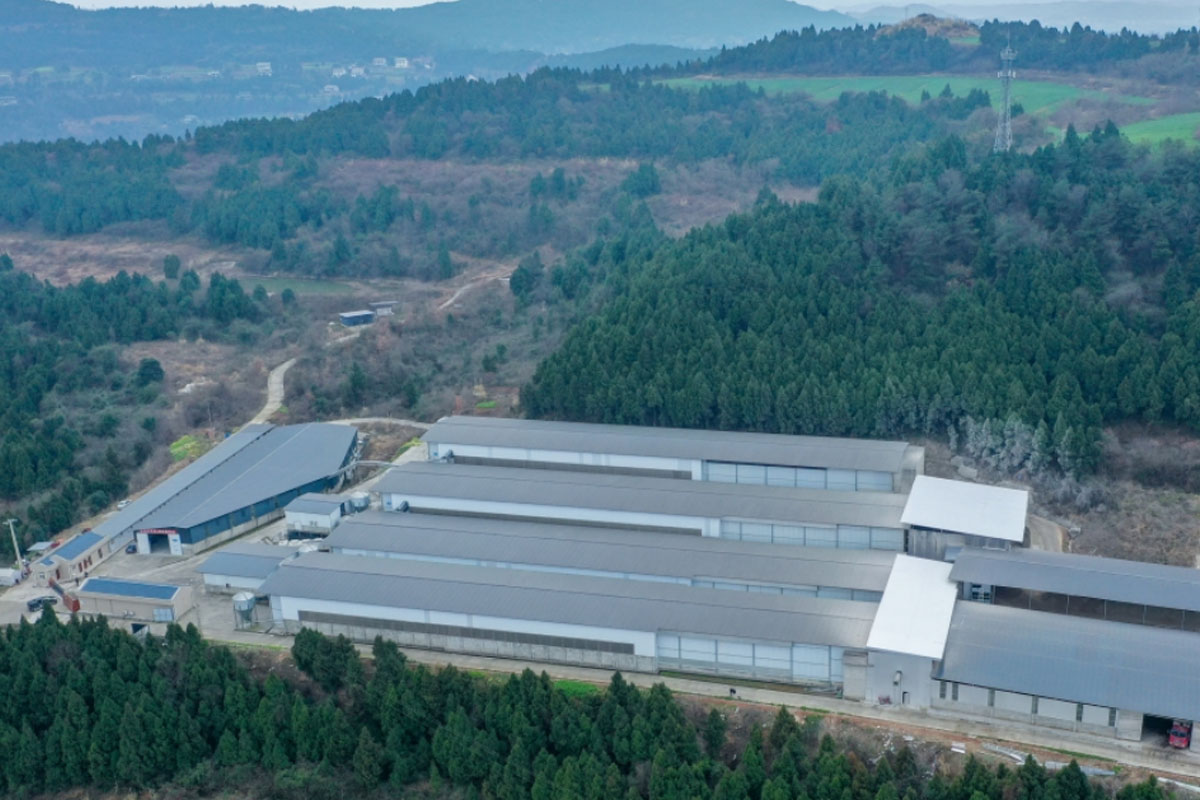
Case Study: A large-scale egg farm in Morocco is located on a gentle slope on the east side of a hill, utilizing the natural slope for drainage and maximizing sunlight exposure through chicken house orientation (north-facing), resulting in a stable egg production rate of over 92%.
II. Soil and Geology: Balancing Bearing Capacity and Drainage
1. Soil Type: Sandy Loam is Preferred
Good Aeration and Drainage: Sandy loam or clay loam allows for rapid rainwater infiltration, reducing the risk of dampness in the chicken coop;
Sufficient Bearing Capacity: Soil bearing capacity must be ≥150kPa to prevent foundation subsidence and structural damage to the chicken coop;
Avoid “Problem Soils”: Such as soft sandy soil, silty soil, or saline-alkali soil, to prevent collapse or corrosion during the rainy season.
2. Geological Exploration: Preemptive Risk Mitigation
Detecting Underground Rock Layers: One chicken farm suffered a foundation collapse after its chicken coop was built due to the failure to detect underground karst caves, resulting in losses exceeding US$500,000;
Away from Earthquake Zones: In earthquake-prone areas, earthquake-resistant design of the chicken coop (such as a steel frame structure) is necessary.
III. Water Source and Quality: A Dual Guarantee for the Lifeline
1. Sufficient Water Supply to Meet Peak Demand
Daily Water Requirement Calculation: Each laying hen drinks approximately 200-300ml of water per day. During peak periods (such as summer or brooding season), an additional 30% surplus should be reserved.
Dual Water Source Configuration: It is recommended to have both deep well water and tap water to avoid water shortages due to drought or pollution.
2. Water Quality Meets Standards, Strictly Controlling Health Risks
Key Testing Indicators:
Microorganisms: Total coliforms, total bacterial count;
Chemicals: pH value (6.5-8.5), hardness (≤450mg/L), heavy metals (lead, mercury);
Toxicological Substances: Nitrates, nitrites, fluorides.
Regular Testing: Water quality should be tested quarterly to prevent diarrhea and decreased egg production caused by water quality issues.
Avoidance Guide: A chicken farm suffered a large-scale chicken death due to the use of polluted river water, resulting in direct economic losses of over US$200,000. After switching to deep well water and installing water purification equipment, the farm returned to normal.
IV. Disease Prevention and Biosecurity: Isolating Contamination, Building a Strong Defense
1. Keep away from pollution sources to reduce the risk of cross-infection
Distance requirements:
Residential areas, schools, hospitals, and other densely populated areas: ≥500 meters;
Slaughterhouses, garbage disposal sites, chemical plants, and other pollution sources: ≥1000 meters.
Wind direction considerations: Chicken farms should be located upwind or crosswind of pollution sources to avoid the spread of odors or dust.
2. Physical isolation to block transmission routes
Green isolation belt: Plant trees or shrubs with a width of ≥10 meters around the chicken farm to block wild birds and rodents from entering;
Wall + disinfection channel: When multiple chicken houses are laid out, the distance between houses should be ≥15 meters, and disinfection pools and changing rooms should be set up to prevent the spread of bacteria by personnel and vehicles.
Data support: Studies have shown that scientifically isolated chicken farms can reduce the incidence of avian influenza by more than 70%.
V. Transportation and Electricity: Smooth Logistics and Stable Supply
1. Convenient Transportation, Reduced Transportation Costs
Road Requirements: ≤3 km from main roads (e.g., provincial highways, national highways) for easy transport of feed and eggs; Hardened on-site roads (e.g., cement roads) to avoid muddy conditions during the rainy season affecting logistics efficiency.
Avoid Transportation Hubs: Located near airports and train stations to reduce noise pollution.
2. Stable Electricity, Guaranteed Equipment Operation
Three-phase power supply: Meets the needs of ventilation, cooling, and lighting equipment;
Backup generator: Power ≥ 120% of total load to prevent sudden temperature increases or ammonia buildup in the chicken coop due to power outages.
Case Study: A chicken farm failed to start its generator promptly during a summer power outage, resulting in the chicken coop temperature rising to 40℃ and over 1000 chicken deaths within 2 hours.
VI. Climate and Environment: Adapting to Local Conditions and Scientific Response
1. Temperature and Humidity Control
Northern Regions: Strengthen chicken coop insulation (wall thermal conductivity ≤ 0.23 W/(m·K)), use underfloor heating or hot air furnaces in winter;
Southern Regions: Optimize ventilation design (summer wind speed ≥ 2 m/s), equip with evaporative cooling systems.
2. Extreme Climate Avoidance
Avoid windy and sandy areas: In arid regions, install windproof netting to reduce dust entry;
Away from typhoon-prone areas: In coastal areas, chicken coops need reinforced roofs to prevent typhoons from overturning them.
VII. Environmental Protection and Compliance: Legal Operation and Sustainable Development
1. Environmental Requirements
Manure Treatment: Construct biogas digesters or organic fertilizer fermentation tanks to achieve resource utilization;
Odor Control: Install biological filters or spray deodorization systems.
2. Land Use Compliance
Land Type: Ensure it is agricultural land or livestock land, avoiding the occupation of basic farmland or forest land;
Complete Permits: Obtain the “Animal Epidemic Prevention Qualification Certificate,” “Environmental Impact Assessment Report,” and other necessary permits to prevent being ordered to cease production later.