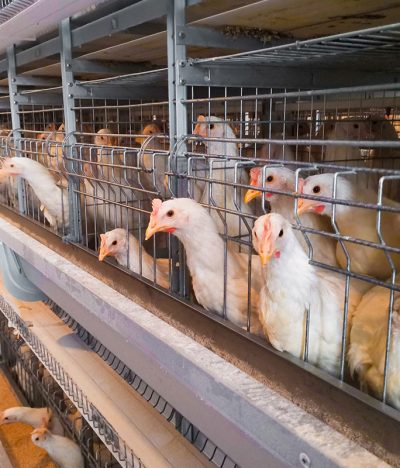
Winter Brooding Temperature and Ventilation Management
Winter chick rearing faces dual challenges
Environmental challenges: Low outside temperatures and high humidity in winter make chick houses prone to hypothermia. Furthermore, low ventilation leads to poor air quality, which can easily lead to chronic respiratory diseases and bacterial infections.
Health challenges: Ultraviolet rays are weak in winter, allowing viruses to survive longer, significantly increasing the risk of infectious diseases. A balanced balance between insulation and ventilation is crucial to avoid increased chick mortality rates due to improper management.
Refined Temperature and Humidity Management Strategies
Methods for Determining Perceived Temperature
Observe chick behavior to determine temperature suitability:
Observe chicks’ feeding, drinking, and crowing patterns.
Pay attention to their resting posture and mental state.
Adhere to the principle of “observing chicks’ temperature” and make timely adjustments.
Temperature Adjustment Techniques
In the event of a significant drop in temperature or strong winds, maintain the same temperature setting and temporarily refrain from increasing ventilation.
If chicks exhibit chilling symptoms, increase heating or reduce ventilation to raise perceived temperature by 0.5-1°C.
Gradually de-warm chicks as they age, avoiding sudden drops in temperature or fluctuating temperatures.
Core Principles of Winter Ventilation Management
Guaranteeing Minimum Ventilation
The primary principle of winter ventilation management is to meet minimum ventilation rates while also controlling temperature and humidity, effectively removing harmful gases and dust, and providing sufficient fresh oxygen.
Harmful effects of insufficient ventilation: Excessive levels of harmful gases can affect growth and development.
Risks of excessive ventilation: Chickens may huddle together, fearing the cold, which can lead to respiratory symptoms.
Key Points in Ventilation Plan Design
Standardized Calculation: Ventilation rates are calculated on a weekly basis. The first three weeks are particularly critical for chicks. At the beginning of each week, use the previous week’s standards as a reference, and adjust to the current week’s standards at the end of each week.
Housekeeping: Raise chicks of the same breed and age as possible to facilitate temperature, humidity, and ventilation rate control. If this is not possible, control the temperature based on the lower limit for younger chicks.
House Airtightness: For houses with poor airtightness that have been used for many years, airtightness must be improved before calculating ventilation rates to ensure effective implementation of the design.
Ventilation Cycle Setting Guide
Set ventilation parameters based on the temperature difference between inside and outside the house. During the brooding period, keep the fan cycle time within 5 minutes:
Daytime Settings: When setting the maximum ventilation level at the highest temperature, consider the birds’ respiratory volume and perceived temperature to avoid excessive air speeds that lower perceived temperature.
Nighttime Settings: When setting the minimum ventilation level at the lowest temperature, ensure adequate respiratory volume to prevent prolonged fan inactivity, which can lead to oxygen deprivation.
The key to successful winter brooding lies in balancing insulation and ventilation. Scientific temperature and humidity control, along with meticulous ventilation management, can not only reduce disease risk but also improve chick survival and growth performance. Farmers are advised to develop personalized management plans tailored to their facility conditions, regularly monitor flock health, and make timely adjustments to ensure chicks remain healthy throughout their critical winter growth period.