With the intensive development of the livestock industry, chicken manure treatment has become a key link in environmental protection and resource utilization in farms. Proper treatment of chicken manure can not only reduce environmental pollution but also transform it into high-quality organic fertilizer, turning waste into treasure. Currently, the most common chicken manure treatment methods on the market include four types: compost turners, horizontal fermentation tanks, vertical fermentation tanks, and chicken manure drying equipment.
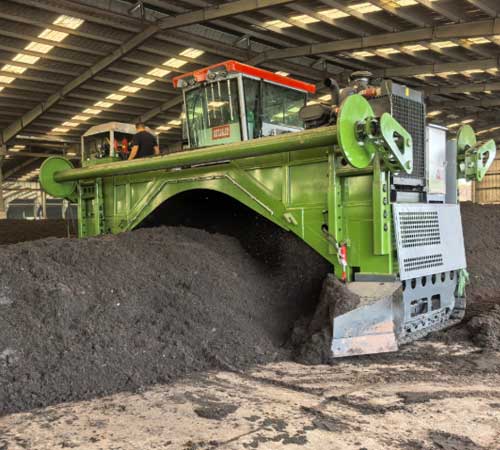
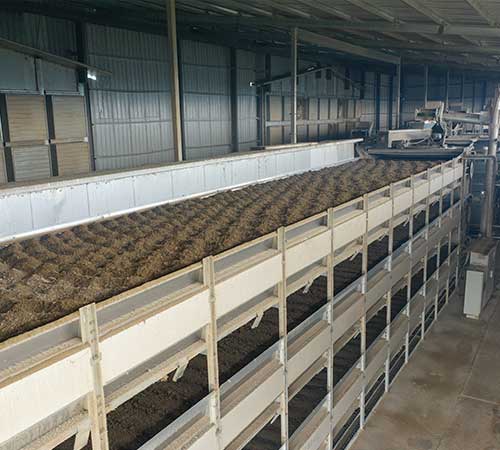
Compost Turner Processing: An Economical Choice for Traditional Composting
A compost turner is a mechanical device developed based on the principle of dynamic composting. It involves piling chicken manure and adding auxiliary materials in a manure ditch, then using the turner to agitate the material, ensuring even contact with air and allowing for natural fermentation.
Working Principle
The compost turner moves back and forth in a long, narrow manure ditch, turning, breaking up, and aerating the accumulated chicken manure, providing sufficient oxygen for aerobic fermentation by microorganisms. The entire process is semi-open and relies on ambient temperature.
Advantages: Low cost: Low equipment investment and low operating and maintenance costs. Large processing capacity: Suitable for large-scale farms for batch processing.
Disadvantages: Large footprint: Requires spacious fermentation tanks or areas. Prominent odor: Semi-open fermentation leads to the spread of foul odors, easily causing complaints from neighbors. Long composting cycle: Natural fermentation is affected by temperature, typically requiring 15-30 days to complete. Uneven composting: Large temperature differences between the upper and lower layers of manure result in unstable fermentation effects. Fly and mosquito breeding: Open-air environments easily attract flies and mosquitoes, affecting environmental hygiene.
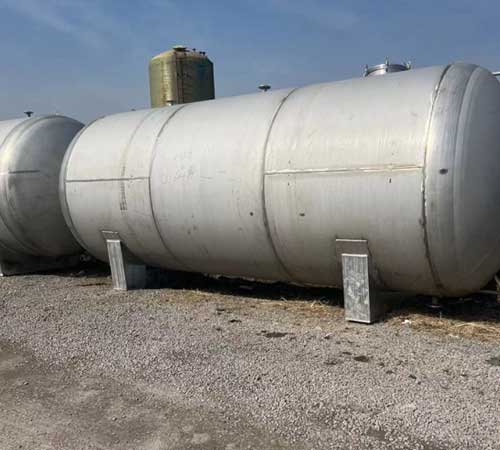
The horizontal composting fermentation drum, also known as a Danot-type fermenter, consists of a horizontal drum 20-35 meters long and 2-3.5 meters in diameter. Rapid fermentation is achieved through rotation and heating.
Working Principle
Chicken manure is fed into the drum and is lifted and naturally falls as the drum rotates, repeatedly turning over and coming into contact with air. The equipment uses electric heating to raise the temperature to 90-100℃ and maintain it for 2 hours, then cuts off the power and maintains 65-80℃. With intermittent stirring, fermentation is completed in approximately 10 hours.
Advantages: Fast processing speed: Harmless treatment completed in about 10 hours. Lower investment cost: Slightly lower equipment cost compared to vertical tanks.
Disadvantages: Larger footprint: Requires considerable installation space. Higher power consumption: Heating and rotation require continuous power. Sensitive to moisture content: Fermentation is less effective when chicken manure has high moisture content; pre-drying is necessary. Equipment quality risks: Some low-quality products may pose an explosion risk.
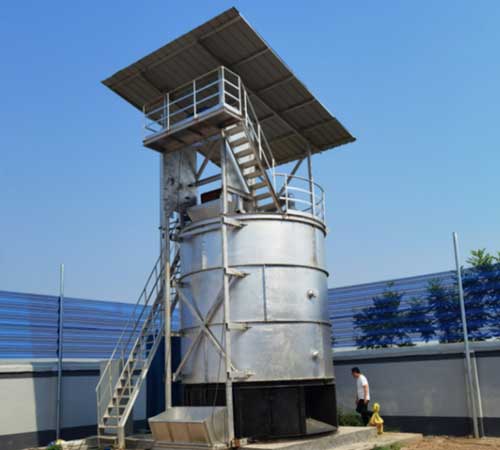
The vertical fermentation tank utilizes the principle of high-temperature aerobic fermentation, making it a popular choice for intensive livestock farms. The tank has a vertical, closed structure, integrating functions such as stirring, ventilation, heat preservation, and insulation.
Working Principle
After chicken manure is added to the tank, it is repeatedly agitated by internal stirring paddles while oxygen is supplied through a bottom ventilation system. The high temperatures (up to 70℃ or higher) generated by microbial fermentation rapidly decompose the manure. The entire process, including harmless treatment, is completed in approximately 10 hours, with a high degree of automation.
Advantages Fast Processing Speed: One batch completes in 10 hours Complete Fermentation: Precise temperature control in a closed environment ensures uniform decomposition Automatic Operation: Programmable automatic control saves labor Small Footprint: Vertical design saves space
Disadvantages High Energy Consumption: High power consumption for stirring, heating, and ventilation systems Safety Risks: Explosion prevention measures are necessary when the closed fermentation temperature is extremely high.
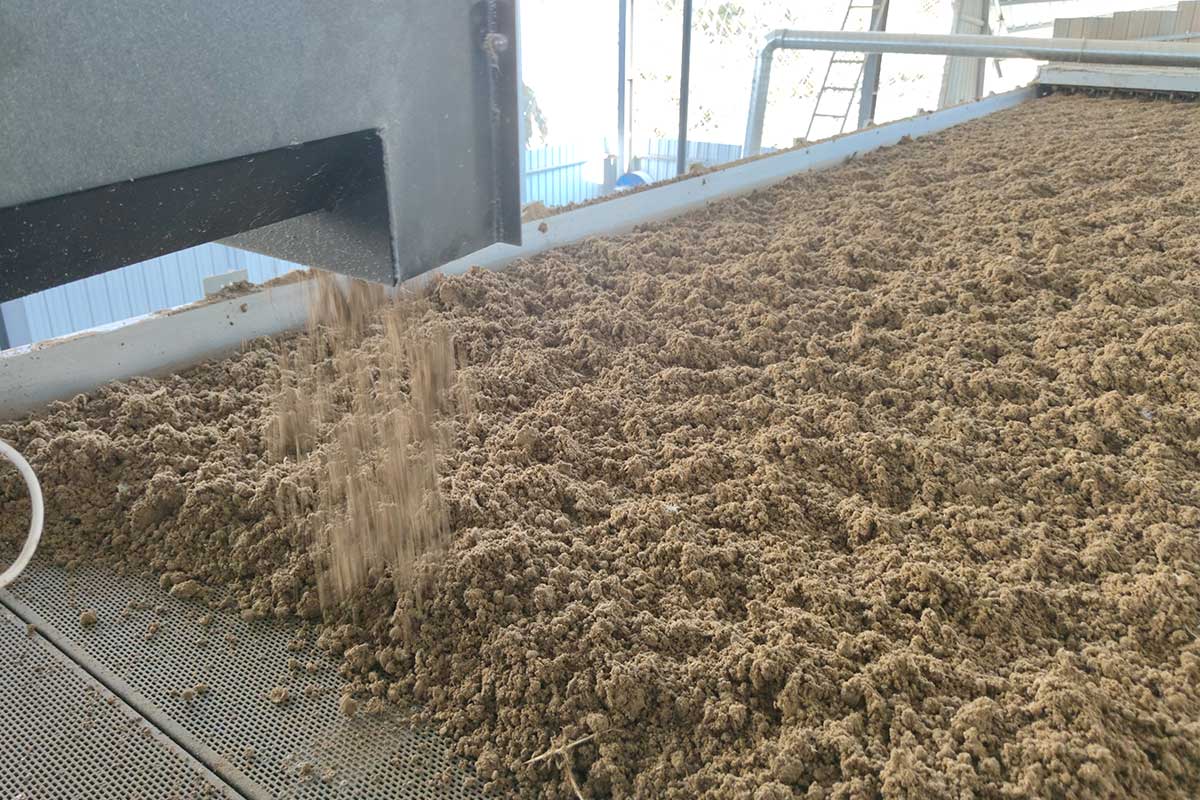
Chicken Manure Drying Equipment: An Energy-Saving Solution Utilizing Waste Heat
Chicken manure drying equipment is an innovative energy-saving treatment method. It is typically installed at the rear of the chicken house, directly utilizing the heat from the exhaust air.
Working Principle
The equipment uses the waste heat and airflow from the chicken house’s exhaust system to quickly dry fresh chicken manure. Depending on weather and humidity conditions, the drying time is between 12-48 hours, ultimately yielding dried chicken manure.
Advantages Extremely low energy consumption: No additional heating required, fully utilizing waste heat. High processing capacity: Can be linked with the chicken house exhaust system for continuous operation. High-quality product: The dried chicken manure is dry, odorless, and commands a high price. High return on investment: Low operating costs and high output, resulting in significant economic benefits.
Disadvantages Affected by weather: Processing efficiency decreases in rainy and humid weather. Requires specific chicken house layout: Only suitable for installation at the rear of newly built or renovated chicken houses.
Comprehensive comparison and selection suggestions
Processing methods
Advantages
Disadvantages:
Suitable for
Compost Turner
Low cost, high processing capacity
Large footprint, strong odor, long production cycle
Small to medium-sized farms with ample land
Horizontal Fermentation Tank
High speed, low investment
Large footprint, high power consumption, quality risk
Medium-sized farms with stable power supply
Vertical Fermentation Tank
High speed, automated, small footprint
High energy consumption, safety precautions required
Large-sized farms with high environmental requirements
Low energy consumption, good quality, high return on investment
Affected by the weather
New or renovated chicken houses
Key Factors to Consider When Choosing Equipment
Scale of Farming: For large-scale farms, vertical fermentation tanks or air-drying equipment are recommended; smaller farms can consider compost turners.
Site Conditions: Vertical tanks are preferred if land is limited; compost turners can be used to reduce costs if land is plentiful.
Environmental Pressure: Farms near residential areas should choose enclosed equipment (vertical or horizontal tanks) to reduce odor emissions.
Energy Costs: Fermentation tanks are preferable if electricity is cheap; air-drying equipment is recommended for energy conservation.
Product Use: If selling organic fertilizer, air-drying equipment and vertical tanks produce higher quality products.
Chicken manure treatment is not only an environmental requirement but also an important way to recycle resources. Choosing the right treatment equipment requires comprehensive consideration of investment budget, site conditions, processing efficiency, and product distribution. With technological advancements, equipment is developing towards higher efficiency, energy saving, and automation. Farmers should choose the most suitable solution based on their specific circumstances and under professional guidance to achieve a win-win situation for both economic and environmental benefits.