Evaporative Cooling Pads in Laying Hen Houses Affect Egg Production Rate
I. Cold Stress: The Double-Edged Sword of Evaporative Cooling
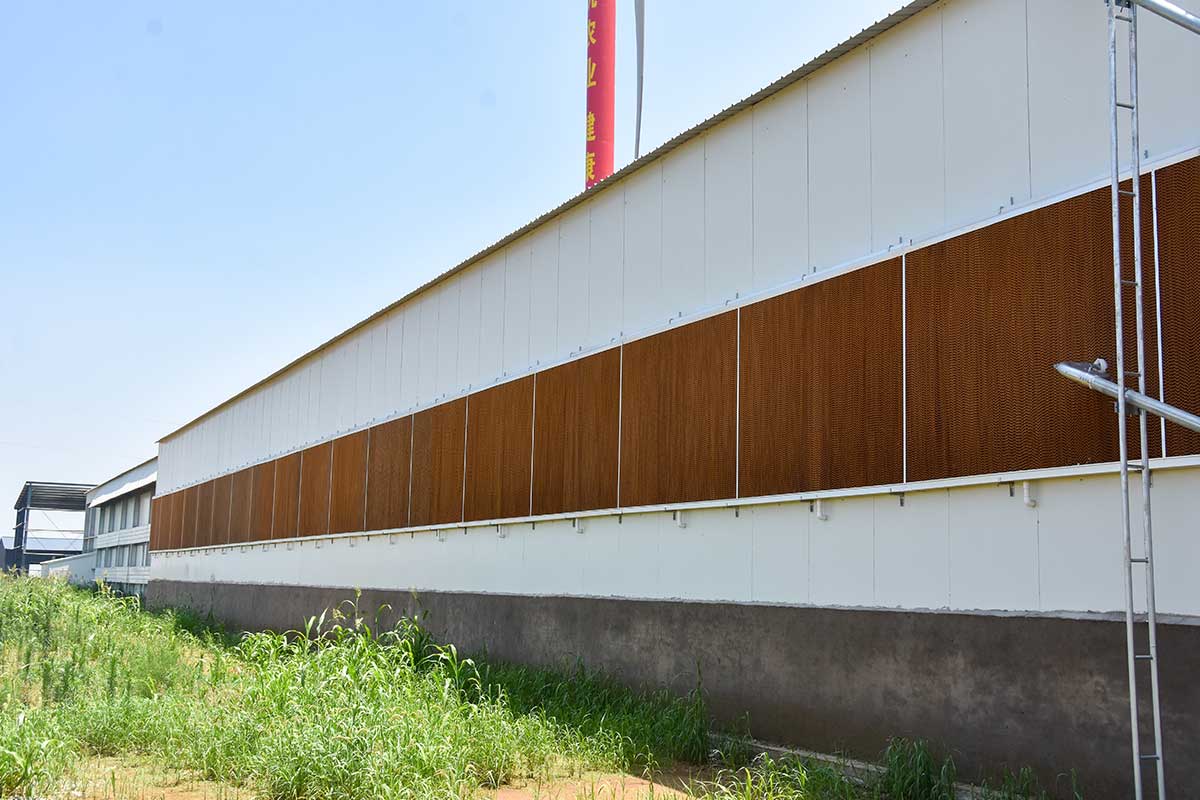
Evaporative cooling systems rely on the principle of heat absorption through water evaporation, which can lower the temperature in the chicken coop by 4°C to 8°C in hot weather. However, if not operated properly, this “cooling sword” can instantly turn into a “cold arrow” that harms the flock.
1.1 Sudden Temperature Drop: The Respiratory System Bears the Brunt
A sudden, full opening of the evaporative cooling pads causes the temperature inside the chicken house to plummet from 32°C to around 25°C, subjecting the flock to a massive temperature difference instantly. The respiratory mucosa of chickens is a fragile defense line; low temperatures cause this defense to “shut down”: vasoconstriction leads to insufficient blood supply, reduced mucus secretion, and cilia cannot move normally, allowing pathogens to directly invade.
When the temperature difference inside the chicken house exceeds 5°C due to the cooling effect of the evaporative cooling pads, it severely violates the environmental control requirement that the temperature difference in laying hen houses should be controlled within 2°C. A sudden drop of more than 5°C in the chickens’ living area within 20 minutes will cause acute cold stress, damaging the flock’s health and affecting production performance.
1.2 Uncontrolled Wind Speed: The Most Insidious “Cold Stress Killer”
Normal use of evaporative cooling pads requires ensuring an airflow velocity of 1.5m/s–2.0m/s through the pads and 2–3m/s behind the chickens. However, many chicken farms operate too many fans or have improper grouping control, leading to uncontrolled wind speeds in some areas.
Case Study 1: A 25,000-hen laying hen farm added two fans at once to lower the temperature, causing wind speeds at the back of the henhouse to exceed 3.5 m/s. Large numbers of 21-day-old and 175-day-old hens lay motionless, their feed intake plummeted by 30%, and egg production severely declined. After reducing the number of fans and lowering the wind speed to below 3 m/s, the paralysis symptoms largely disappeared the next day.
Case Study 2: A 200-day-old laying hen farm, after using evaporative cooling pads, experienced a mortality rate exceeding 0.3% in 5-6 cage groups near the pads, and egg production decreased by approximately 10%. Laboratory tests showed positive results for E. coli.
Research indicates that when wind speeds at the back of chickens exceed 3 m/s, feed intake significantly decreases, leading to cold stress.
1.3 Uncontrolled Negative Pressure and Diurnal Temperature Difference are Equally Dangerous
Excessive negative pressure can result from an improperly sized air inlet when the evaporative cooling pads are turned on, leading to high wind speeds at the front and stuffy, oxygen-deficient conditions at the rear; drafts from unsealed evaporative pads blowing directly onto the chickens’ backs; and diurnal temperature differences exceeding 8°C or hourly temperature differences greater than 3°C—all of these can trigger varying degrees of cold stress.
The scientific approach should be a two-pronged approach of “cooling + dehumidification”: When using an evaporative cooling pad + longitudinal ventilation system, a baffle plate should be installed behind the evaporative pads to prevent moisture from directly entering the chicken house and causing humidity spikes.
II. Immunosuppression and Mycotoxins: The "Behind-the-Scenes Culprits" of Decreased Immunity
Why do some flocks suffer heavy losses while others remain relatively stable under the same wet curtain operation? The fundamental reason lies in the difference in their basic immunity.
2.1 Widespread Prevalence of Immunosuppressive Pathogens
2025 testing data showed that the detection rate of Chicken Infectious Anemia Virus (CAV) reached 54.4% (899/1653), an increase of 7.8% year-on-year, making it the most widely distributed and highest-pressure immunosuppressive pathogen. Marek’s Disease Virus (MDV) had a detection rate of 38.1%. The rate of mixed infection with CAV, IBV, MS, etc., was extremely high.
Although H9 subtype avian influenza presents with mild symptoms, it damages the respiratory mucosa and immune barrier, primarily resulting in decreased egg production in laying hens. Under the influence of these diseases, the flock’s immunity is significantly weakened, and a single cold stress stimulus can be the final straw.
2.2 “Slow Toxicity Damage” from Mycotoxins
Mycotoxins damage the liver, kidneys, reproductive system, and immune system through feed contamination. A 2025 feed mycotoxin survey report showed that 100% of corn samples were contaminated with mycotoxins, with an average of 9.2 different mycotoxins per sample. The rate of corn mycotoxin contamination exceeding the standard reached 14.4%, reaching the level of severe contamination.
Mixed contamination has become a source of hidden losses in poultry farming, leading to a 2%-8% decline in egg production, thinning and whitening of eggshells, and difficulty in improving vaccine antibody levels. When the use of evaporative cooling pads increases humidity in the sheds, mold biofilm is more likely to grow in the water lines and feed troughs, exacerbating chronic intestinal damage.
III. Summer Gut Health Crisis: The Neglected "Digestive and Absorption Hub"
Besides cold stress and immunosuppression, the third major challenge facing laying hens in summer is gut health.
3.1 High Temperature and Humidity: A Breeding Ground for Bacterial Growth
In summer, indoor temperatures often exceed 28℃, and humidity can rise to 70%-80% after the evaporative cooling pads are turned on. This environment is a “paradise” for Escherichia coli, Salmonella, and Clostridium perfringens (the main pathogen of necrotic enteritis).
The incidence of bacterial enteritis increases significantly, and necrotic enteritis occurs frequently. Prolonged retention of feed in the feed trough easily leads to spoilage and fermentation, and the biofilm on the inner wall of the water line provides a haven for bacteria. Once the flock experiences cold stress, intestinal blood vessels constrict, and the mucosa becomes ischemic and hypoxic, allowing previously suppressed conditionally pathogenic bacteria to proliferate rapidly, causing enteritis.
3.2 Typical Harms of Necrotic Enteritis
Clostridium perfringens proliferates rapidly and produces toxins when the intestinal mucosa is damaged or when coccidiosis occurs, leading to thinning of the intestinal wall, bleeding, and even necrosis. Clinically, this manifests as thin, foamy, or bloody feces, and an increased mortality rate.
Although chronic infections do not result in obvious mortality, they significantly reduce the intestinal digestive and absorptive surface area, leading to widespread feed waste and a marked increase in the feed conversion ratio. Statistics from some chicken farms show that subclinical infection with necrotizing enteritis in summer can reduce egg production by 3%-5% and increase the rate of eggshell whitening by more than 10%.
3.3 The Vicious Triangle of Stress-Enteritis
Cold stress reduces intestinal blood supply and immune function, while mycotoxins damage intestinal epithelial cells and tight junction proteins, both of which together open the door for bacterial invasion. Enteritis further weakens nutrient absorption, resulting in a lack of amino acids, vitamins, and other raw materials needed to repair the immune barrier, forming a vicious cycle of “stress → intestinal damage → poor nutrient absorption → lower immunity → increased stress susceptibility.”
Neglecting intestinal health renders any cooling measures and health care programs ineffective.
IV. Lack of Early Management: Hidden Dangers During Low Egg Prices
Many chicken farms adopted a “reduced-volume operation” strategy when egg prices were low: lowering feed nutritional levels, reducing health care inputs, and cutting necessary vaccine expenses. While this superficially reduced costs, it actually harmed the health of the flock. When egg prices rebounded and production needed to be increased rapidly, it was discovered that the flock’s physical condition had deteriorated significantly.
Low immunity is the long-term accumulation of neglected health care. Neglecting the use of immune enhancers, probiotics, and mycotoxin binders during low market conditions, and failing to condition and protect the respiratory and intestinal mucosa before turning on the evaporative cooling pads—all these factors continuously weakened the flock’s resistance. When summer temperatures soared, a single misoperation of the evaporative cooling pads could wipe out a month’s worth of egg production profits. Such losses are particularly regrettable under the current high egg prices.
V. Systemic Prevention and Control: An Integrated Solution from Environment to Gut Health
True prevention and control must span the entire chain of “environment—gut health—immunity—nutrition.”
5.1 Scientific Use of Evaporative Cooling Pads, Eliminating Operational Errors
Activation Threshold: Start with the fans when the indoor temperature reaches 28℃. Gradually activate the evaporative cooling pads when the temperature reaches 30℃ and more than 5% of the chickens are opening their mouths. Activate in batches (1/3 each time), observing for half an hour at intervals. Never activate all pads at once.
Intermittent Watering: Use an intermittent mode of running the evaporative cooling pads for tens of seconds and stopping for several minutes to avoid continuous water accumulation and excessive humidity in the shed. Control the temperature reduction to within 2-3℃.
Feeling Temperature and Humidity Control: When humidity is <70%, the wind speed should not exceed 3m/s; use evaporative cooling pads with caution when humidity is >70%; when the external relative humidity exceeds 80%, the cooling effect of the evaporative cooling pads is extremely poor, and their use should be stopped, with the fans running at full capacity to enhance the cooling effect.
Turn on the fans first, then the evaporative cooling pads: Ensure a longitudinal negative pressure in the chicken house, allowing cool air to enter through the evaporative cooling pads and exit through the fans, evenly distributing across the flock.
Equipment Maintenance: Regularly flush the evaporative cooling pads, change the circulating water, and seal any leaks to prevent drafts from blowing directly on the chickens’ backs.
Monitor Feeling Temperature: Don’t judge the flock’s comfort solely by dry bulb temperature; consider humidity and wind speed to calculate the chickens’ actual feeling temperature.
5.2 Strengthen Immunization and Inhibit Pathogens
Use immune enhancers (transfer factor, interleukin-2, etc.) during the brooding period; strictly administer vaccines against infectious bursal disease and Marek’s disease, and promote CAV (carcinoma of the air) source purification where possible; Develop an appropriate immunization schedule for H9 vaccine based on the matching degree of the circulating strain.
5.3 Strict Control of Mycotoxins and Purification of Feed and Water Lines
Raw Material Control: Reject moldy corn and soybean meal; conduct random toxin testing on each batch; store raw materials 30cm off the ground.
Feeding Management: Process in small batches frequently; do not store finished feed for more than 2 days during high-temperature weather; clean empty feed troughs daily.
Mycotoxin Removal Treatment: Use highly effective mycotoxin removers (such as Mycotoxin-Free 7G) to eliminate mycotoxins and protect the liver and kidneys.
Water Line Management: Regularly clean biofilm on water lines to prevent mold growth.
5.4 Maintaining Gut Health and Breaking the “Stress-Enteritis” Cycle
Preventative Addition: Before summer arrives, regularly add probiotics (such as “Wu Yan Yi Dui”) to the feed to repair the intestinal mucosa and inhibit harmful bacteria such as Clostridium perfringens.
When signs of enteritis appear: Loose stools and undigested feed can be treated with products targeting anaerobic bacteria (such as “Ti Kang Tai”), along with a mycotoxin binder to absorb toxins and protect the intestinal mucosa.
Water Acidification: Adding citric acid or lactic acid (pH 3.5-4.0) to the drinking water can inhibit Escherichia coli and Salmonella, while promoting digestive enzyme activity.
Summer cooling with evaporative cooling pads in laying hen houses is a double-edged sword—used correctly, it ensures stable and high egg production; used incorrectly, it can cause a sharp drop in egg production. Cold stress is not an isolated event but a systemic problem interconnected with immunosuppression, mycotoxins, and gut health.
Given the current high egg prices, any fluctuation in egg production performance means a significant financial loss. It is recommended that each farm establish a four-in-one summer prevention and control system that integrates “environmental monitoring, equipment operation, immune health care, and intestinal management” to minimize the risk of cold stress and ensure that chickens can safely get through the summer and achieve stable production and increased income.