What Situations Cause Stress in Laying Hen Farming?
Common stressors for caged laying hens include: heat stress; cold stress and drastic temperature fluctuations; poor air quality; improper lighting management; feed and water deprivation; changes in feed and nutritional fluctuations; handling during flock transfer and vaccination; fright; and issues related to stocking density and cage suitability.
Why are Cage-Reared Laying Hens More Prone to Stress?
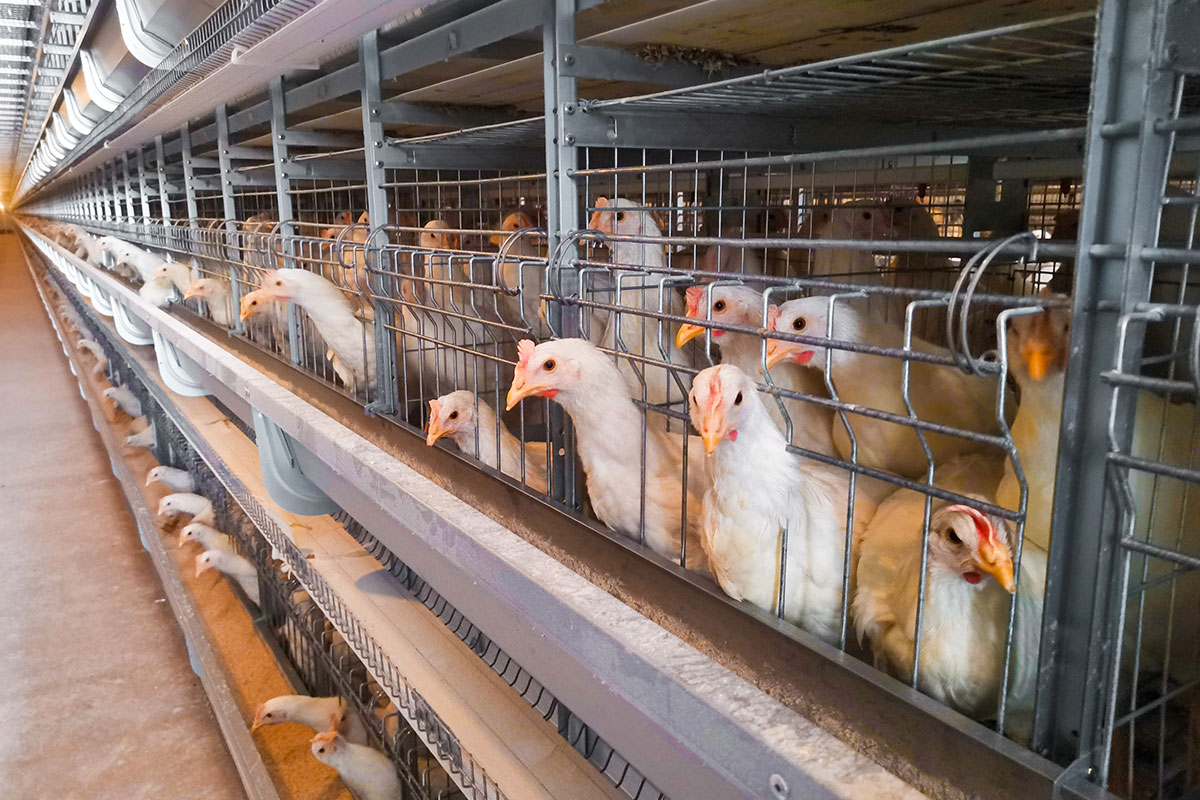
Cage-reared laying hens have limited space and are kept at high stocking densities, with heat dissipation conditions that are generally inferior to those of floor-reared birds. When faced with stressors such as high temperatures, stifling heat, cold drafts, noise, or interruptions in feed and water supply, the hens cannot move to a different location to escape; they are forced to endure the conditions passively.
Therefore, the key to managing cage-reared laying hens lies not in “treating problems after they arise,” but in maintaining stability—regarding the environment, feed and water, lighting, and handling procedures—to minimize sudden changes.
Common Stressors and Symptoms in Cage-Reared Laying Hens
1. Heat Stress: The Number One Killer of Cage-Reared Layers
Cage-reared hens are in close proximity to cage walls and housed at high densities; the stacked arrangement naturally results in poorer heat dissipation compared to floor-rearing systems. Heat stress outbreaks are most likely to occur when high temperatures and high humidity coincide with poor ventilation.
Common symptoms:
Panting with open mouths; wings held slightly away from the body.
Sharp drop in feed intake; surge in water consumption.
Smaller eggs; eggshells becoming pale and thin.
Increased incidence of soft-shelled eggs in the afternoon.
Sudden spike in mortality and culling rates.
The critical factor in heat stress is not merely the ambient temperature, but the “feels-like” temperature and the ability to exhaust hot, humid air. Fans that merely circulate air without exchanging it effectively blow hot air, potentially exacerbating the problem.
2. Cold Stress and Drastic Temperature Fluctuations
Cold stress is often overlooked but is common in cage-reared poultry houses:
Cold air rushing in during the early morning, blowing directly onto the cages.
Drafts blowing through doorways.
Sudden drops in nighttime temperature without corresponding adjustments to ventilation settings.
Common symptoms:
Diarrhea.
Inconsistent feed intake.
Wet nostrils.
Slight decline in egg production.
Prolonged or recurring exposure makes the flock vulnerable to respiratory diseases.
In cage-reared houses, the rows of cages closest to the outer walls, gable ends, and doorways often serve as the “early warning system,” showing problems first.
3. Poor Air Quality: Chronic Stress Caused by Stagnant Air
Poor air quality involves more than just unpleasant odors. The following issues can cause chronic stress:
High ammonia levels: Irritates eyes and nostrils, damages the cornea and respiratory mucosa, and paves the way for *Mycoplasma* and Infectious Bronchitis (IB) infections.
High carbon dioxide levels: Causes lethargy and suppresses feed intake.
High dust levels: Dust carries feather dander, skin flakes, and microbial flora, causing chronic irritation to the respiratory tract.
This type of stress rarely causes a sudden, catastrophic flock collapse; instead, the birds may appear outwardly healthy while suffering from poor feed conversion ratios, stagnant egg production, and inconsistent eggshell quality.
4. Improper Lighting Management
Inconsistent lighting schedules can significantly stress the flock:
Sudden full illumination or total darkness when switching lights on or off
Fluctuating light durations
Uneven brightness, creating dark corners within the cages
Disrupted supplemental lighting schedules following power outages.
Typical signs:
Excessive noise and agitation for several minutes after lights come on
Flock panic (“exploding”), frantic flapping, trampling, and feather pecking
Cyanosis (purplish discoloration) of the comb
Transient watery droppings.
5. Interruptions in Feed and Water Supply: Seemingly Minor Issues with Devastating Consequences
Feed Interruption
Caused by jammed feeders, clogged feed lines, empty feed silos, or scheduling errors during holidays; missing even a single meal can lead to:
Blood sugar fluctuations
Disrupted intestinal motility
Interrupted endocrine rhythms
Subsequent drops in egg production, poor eggshell quality, an increase in soft-shelled eggs, and occasionally, sporadic cases of paralysis.
Water Deprivation
Water deprivation is more critical than feed interruption. Clogged nipple drinkers, low water pressure, dirty filters, frozen pipes in winter, or excessively high water temperatures in summer can all cause water deprivation.
Deprivation lasting more than half a day can result in:
Acute kidney injury
Urate deposition
Sudden mortality or culling
A precipitous drop in egg production.
The survival of caged chickens hinges on the feed lines and nipple drinkers; the frequency of inspecting these systems warrants the same level of attention as vaccination protocols.
6. Feed Changes and Nutritional Fluctuations
Abrupt feed changes without a transition period: Causes diarrhea, disrupted feeding patterns, and digestive stress.
Calcium deficiency, improper phosphorus levels, or incorrect calcium particle size: Leads to thinning eggshells and broken shells on cage floors; severe cases can result in cage layer fatigue (paralysis).
Mycotoxins: Caused by moldy feed, mold at the bottom of storage bins, or fermentation of leftover feed in troughs during summer. These act as chronic toxins and immune suppressants, manifesting as liver issues, spotted eggs, sporadic mortality, and rapid antibody titer decline.
7. Stress from Handling: Flock Transfers, Cage Moves, Catching, and Vaccination
Cage-reared birds are particularly vulnerable to these procedures because they cannot disperse:
Flock transfer: Moving from rearing cages to laying cages disrupts the social hierarchy and synchrony of eating and drinking due to the unfamiliar environment.
Rough handling or dumping birds between cages.
Improper timing of manure removal: Noise and vibration from manure removal carts, combined with rising odors.
Aggressive vaccination techniques: Rough handling of wing bases, improper needle use, or incompatible spray droplet sizes, causing localized pain, coughing/choking, and flock panic.
The typical pattern for this type of stress is a “dip” in the egg production curve 24–72 hours after the event, followed by a gradual recovery—provided there is no secondary infection.
8. Stress from Fright: Noise, Shadows, Animals, and Unusual Equipment Sounds
Dogs or cats darting into the poultry house.
Rats running along the tops of the cages.
Thunderstorms or nearby construction work.
Ventilation fans suddenly reversing direction or making high-pitched noises.
Sheet metal banging loudly in the wind.
Cage-reared birds have nowhere to hide; an entire row of birds may panic and jump simultaneously. The consequences resemble those of a sudden, intense light-up: birds crashing into cages, getting wings trapped, feather pecking, and stress-induced suppression of egg production.
If blood spots frequently appear on cage floors or eggs, or if birds show bruised comb edges or bruising around the eyes, it is likely not a disease but the result of being frightened and subsequently injuring themselves by crashing into the cage.
9. Stocking density and cage unsuitability: Chronic, low-intensity stress
Cages are too small.
Insufficient number of drinking nipples (the standard is generally at least one per four birds, and they must be easily accessible).
Improper angles for perches or cage floors.
Cage wires causing abrasion to feathers or combs.
These factors keep the birds in a state of chronic tension; the addition of even minor heat stress or a disruption in feed supply can easily trigger outbreaks of feather pecking, vent pecking, and fluctuations in egg production.
Summary of Common Signs of Stress in Laying Hens
| Performance Indicators | Potential Signs |
| Egg production | Drop in laying rate, dip in the laying curve, increase in soft-shelled eggs |
| Eggshell | Whitening or thinning of eggshells, high breakage rate, spotted eggs |
| Feed and water intake | Sudden drop in feed intake, sharp increase or decrease in water consumption |
| Mortality and culling | Sudden mortality/culling, sporadic cases of paralysis |
| Respiratory system | Coughing, rales, moist nostrils |
| Droppings | Diarrhea, watery droppings, urate deposits |
| Behavior | Flock agitation, feather pecking, vent pecking, crashing into cages, trapped wings |
How Do You Troubleshoot a Sudden Drop in Egg Production?
When you observe a sudden decline in egg production, a deterioration in eggshell quality, or an increase in mortality and culling, prioritize investigating the following areas in this order:
First, check for interruptions or irregularities in feed and water supply.
Inspect feed lines, water lines, and water quality; check feed troughs for leftover feed and signs of mold.
Next, assess temperature, humidity, ventilation, and ammonia levels.
Go to the furthest rows, the areas closest to the walls, and the top tiers to personally experience the actual environment the chickens are in.
Then, review the lighting program and check for recent power outages or schedule changes.
Observe whether the lights switch abruptly between full brightness and total darkness, and verify the stability of the lighting duration.
Only then should you delve into potential disease issues.
In most cases, the first three steps explain the vast majority of “unexplained” drops in egg production.
Key Management Practices to Reduce Stress in Cage-Reared Laying Hens
Maintain a stable environment: Ensure proper ventilation and airflow; control temperature and humidity; and minimize ammonia, carbon dioxide, and dust levels.
Stabilize lighting: Use a consistent lighting program; employ gradual transitions for brightening and dimming to avoid sudden shifts between full light and total darkness.
Ensure consistent feed and water supply: Frequently inspect feed lines, water lines, water pressure, filters, and troughs to prevent mold and blockages.
Manage feed transitions smoothly: Implement a gradual transition when changing feed; ensure appropriate calcium-to-phosphorus ratios and calcium particle sizes.
Handle birds gently: Perform flock transfers, catching, vaccinations, and manure removal with care to minimize flock agitation.
Optimize stocking density and cage setup: Ensure an adequate number of water nipples and sufficient cage space; maintain cage safety and integrity.
Minimize disturbances: Keep out rodents, cats, and dogs; regularly maintain ventilation fans, doors, and windows.
Monitor and track data: Daily track egg production curves, eggshell quality, feed and water intake, and mortality/culling rates.
The core of management lies not in waiting for problems to erupt, but in minimizing unexpected issues, maintaining stability, and proactively identifying potential risks. Keep this practical sequence in mind: first check feed and water; next, check temperature, humidity, and ventilation; then, check lighting; and finally, check for diseases. By properly managing these steps, you can detect and address most stress-related issues and fluctuations in egg production in laying hens much earlier and more effectively.