Management Strategies for the Standardized Upgrading of Small and Medium-Sized Layer Farms
Current Major Issues Facing Small and Medium-Sized Layer Farms
1. Non-standardized Infrastructure
Many small and medium-sized layer farms are established through the retrofitting of existing sites without scientific planning. This often results in disorganized functional zoning, where “clean” paths (for feed, personnel, etc.) and “dirty” paths (for waste, carcasses, etc.) overlap. Poultry houses frequently lack adequate thermal insulation and climate control (temperature and humidity regulation). Furthermore, facilities for rearing, ventilation, and egg storage are often rudimentary, with low levels of automation—conditions that increase the risk of disease outbreaks and compromise both production stability and egg safety.
2. Lack of Standardized Rearing and Management
Some farms still rely on the personal experience of individual farmers rather than established protocols. There is a lack of standardized practices for sourcing breeds, formulating feed, and managing feeding processes. Issues such as improper feed storage, incomplete production records, and a lack of professional expertise among staff contribute to inconsistent operational efficiency and profitability.
3. Weak Biosecurity and Disease Control Systems
Certain farms lack proper disinfection facilities, maintain inadequate sanitation protocols, and exercise lax control over the movement of personnel, vehicles, and supplies. Inappropriate immunization schedules and limited capacity for disease monitoring and diagnosis increase the risk of pathogen transmission and the potential for excessive veterinary drug residues.
4. Insufficient Environmental Protection and Waste Management
Many farms lack adequate facilities for handling manure and waste, leading to issues such as indiscriminate discharge or open-air stockpiling. Waste treatment processes are often overly simplistic, and the integration of livestock farming with crop production—a key component of a circular agricultural system—is poorly developed. These shortcomings frequently result in the pollution of local water, soil, and air, making it difficult to meet environmental regulatory requirements.
Key Focus Areas for the Standardized Upgrading of Small and Medium-Sized Layer Farms
1. Upgrading Farm Layout and Infrastructure
Optimize the overall farm layout based on the principles of “zoning for isolation” and “functional integration.” Clearly delineate production areas, living quarters, and waste treatment zones, utilizing physical barriers to separate these sections. Establish distinct pathways for “clean” (supplies/feed) and “dirty” (waste/manure) transport to ensure complete separation and spatially block potential cross-contamination routes.
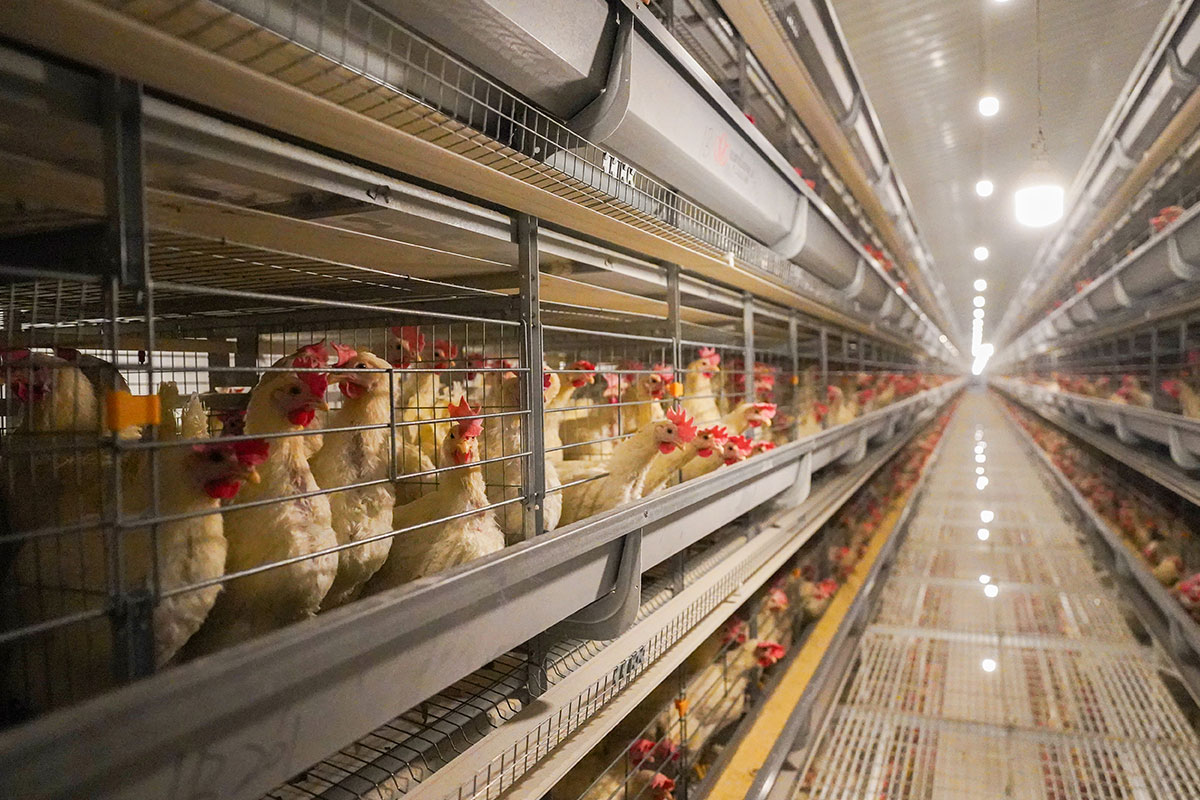
Implement standardized upgrades for poultry houses by using thermal insulation materials to enhance airtightness and environmental control capabilities. Install automated systems for feeding, watering, manure removal, and environmental regulation. This automation minimizes human interference, thereby supporting optimal flock growth and egg-laying performance.
Additionally, construct standardized egg storage facilities equipped with cleaning and low-temperature storage capabilities to ensure egg quality and safety. Strengthen physical biosecurity barriers by improving perimeter fencing and establishing vegetative buffer zones.
2. Standardizing Rearing and Management Systems
Develop comprehensive, standardized operating procedures for the entire rearing process, ensuring that every production stage is guided by clear protocols and remains fully traceable.
Standardize Stock Sourcing: Procure birds only from certified breeding farms that hold valid production and business licenses. Strictly enforce quarantine protocols at the source and implement mandatory isolation and observation periods upon arrival to safeguard chick quality and biosecurity.
Implement Precision Feeding: Establish feeding standards tailored to the specific growth stages and laying cycles of the hens. Optimize dietary nutrient composition to ensure a balanced nutritional intake.
Regulate Feed Storage: Utilize dedicated feed storage facilities equipped with measures to prevent moisture, mold, rodents, and pests. The use of moldy or expired feed is strictly prohibited.
Maintain Comprehensive Farm Records: Keep detailed logs of key data—including flock size, age, egg production, feed consumption, vaccinations, medication use, and the disposal of deceased birds. Standardize daily operational procedures to improve management consistency and production stability.
3. Upgrading Biosecurity and Disease Prevention Systems
Install multi-level disinfection facilities at the entrances to the farm, production areas, and individual poultry houses. This should include the provision of disinfection pits, specialized disinfection corridors, and dedicated changing rooms equipped for sanitation. Establish standardized disinfection management protocols, specifying the frequency of disinfection, types of agents used, and operational procedures; conduct regular evaluations of disinfection effectiveness.
Implement strict controls for personnel and materials. Production staff must change into designated work attire and footwear and complete a disinfection process before entering production areas. External personnel are generally prohibited from entering production areas; any necessary entry is subject to rigorous approval and disinfection procedures. Materials such as feed and veterinary drugs must have their outer packaging disinfected before entering the facility, and must be stored in designated locations with clear labeling.
Develop evidence-based immunization programs tailored to local disease prevalence. Standardize the storage, transport, and administration of vaccines; conduct regular antibody testing and implement supplementary vaccinations or preventive measures as needed to reduce the risk of disease outbreaks.
4. Upgrading for the Resource Utilization of Manure and Waste
Adhere to the principles of “reduction, harmless treatment, and resource utilization” when upgrading manure and waste treatment facilities, addressing environmental concerns through a combination of source reduction and end-of-pipe management.
Implement dry manure removal: Utilize mechanical manure-clearing equipment to reduce the moisture content of the waste, thereby simplifying subsequent treatment processes.
Construct treatment facilities: Build rainproof and impermeable sites for manure stacking and fermentation, as well as infrastructure for the collection and treatment of wastewater. Select appropriate technologies—such as aerobic composting or off-site fermentation beds—based on the scale of the farming operation and the capacity of surrounding land to absorb the waste.
Establish integrated crop-livestock cycles: Install systems for the transport and field application of manure. Once treated to ensure safety, the waste can be utilized as organic fertilizer on farmland, creating an “animal husbandry–manure–crop cultivation” ecological cycle.
Control malodorous gases: Mitigate unpleasant odors by optimizing the frequency of manure removal, enhancing ventilation within the livestock housing, and employing biological deodorization techniques, thereby improving the environment both within the facility and in the surrounding residential areas.
FAQ
Q1: What are the key focus areas for the standardized upgrading of small and medium-sized layer farms?
Key areas include the layout of the farm site and infrastructure upgrades, standardization of feeding and management, enhancement of biosecurity and disease prevention systems, and the resource-based utilization of manure and waste. This process also requires support through policies, technical expertise, and operational management mechanisms.
Q2: Why should layer farms implement a separation between “clean” and “dirty” pathways?
Separating clean pathways (for inputs/supplies) from dirty pathways (for waste/byproducts) helps minimize cross-contamination between the transport of clean materials and the removal of waste. It is a crucial measure for maintaining farm biosecurity and ensuring a standardized site layout.
Q3: Where should small and medium-sized layer farms begin when establishing biosecurity and disease prevention measures?
Farms should start by implementing tiered disinfection at entry points, strictly controlling the movement of personnel and materials, establishing standardized disinfection protocols, adopting scientific vaccination programs, and conducting regular antibody testing—thereby creating an actionable, closed-loop biosecurity system.
Q4: How can layer farms balance environmental protection with the utilization of manure and waste?
Farms can adopt dry manure removal processes, supplemented by rainproof and impermeable facilities for composting/fermentation and wastewater collection. Suitable treatment methods—such as aerobic composting or off-site fermentation beds—should be selected, alongside the development of integrated crop-livestock circular farming models.
Q5: What benefits can be gained from standardized upgrading?
Standardized upgrading helps improve production efficiency, enhance egg safety, and strengthen resilience against risks. It bolsters a farm’s capacity for compliant operation, improves the ecological environment, and promotes the green, sustainable development of the layer farming industry.