Advantages of H-type high-rise cages for laying hens
Core technical advantages of the H-type high-rise cage laying hen model
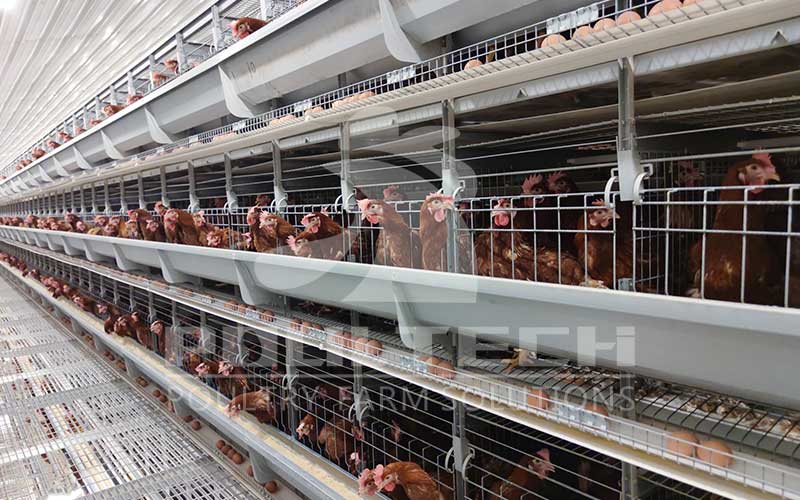
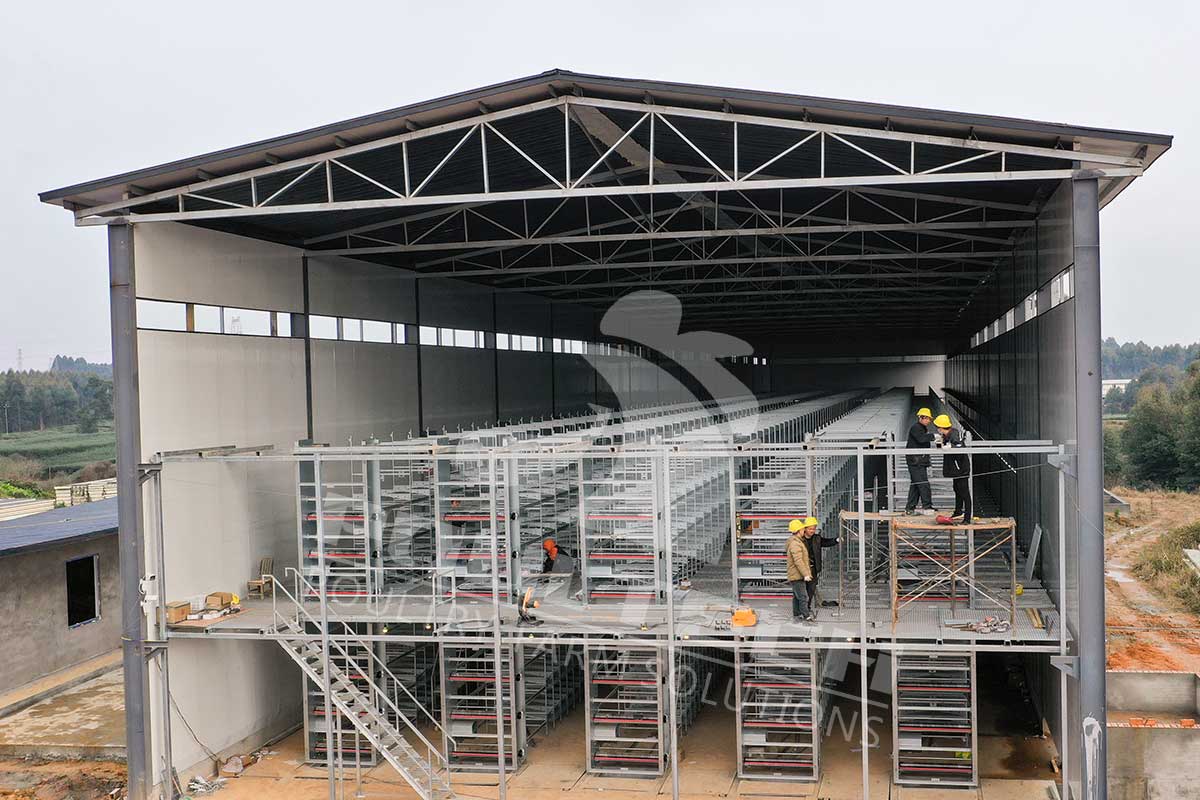
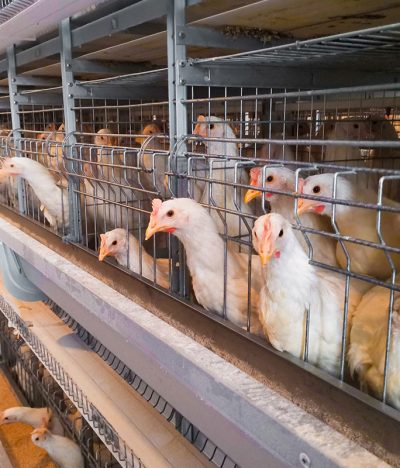
1. Efficient use of land resources: The high-rise cage system adopts a multi-layer three-dimensional design (usually 4-8 layers), and the breeding density per unit area is increased by 3-5 times. For example, a standardized high-rise cage chicken house can accommodate 50,000-100,000 laying hens, and the land utilization rate is increased by more than 80% compared with the traditional model, significantly reducing the land cost.
2. Three-dimensional expansion of breeding space: Through modular cage design, the whole process of feeding, drinking water, egg collection and manure cleaning is automated. The three-dimensional layout reduces the waste of chicken activity space, while optimizing the ventilation and lighting design to ensure that each layer of chickens has uniform environmental conditions, and the stability of egg production rate is increased by 10%-15%.
3. Improved feed conversion rate: The integrated intelligent feeding system dynamically adjusts the feed formula and feeding amount according to the age, weight and egg production rate of the flock. Experimental data show that the feed conversion rate (FCR) can be reduced to 1.8-2.0:1 in the high-rise cage mode, saving 15%-20% of feed costs compared with the flat cage mode.
4. Improved egg production performance: The closed chicken house and intelligent temperature control system maintain the temperature in the house at 20-25℃ and the humidity at 50%-65%, reducing the impact of heat stress and cold stress on egg production. At the same time, the 16-hour lighting program and low-density breeding design enable the peak egg production rate to exceed 95%, and the feed-egg ratio is reduced to below 2.1.
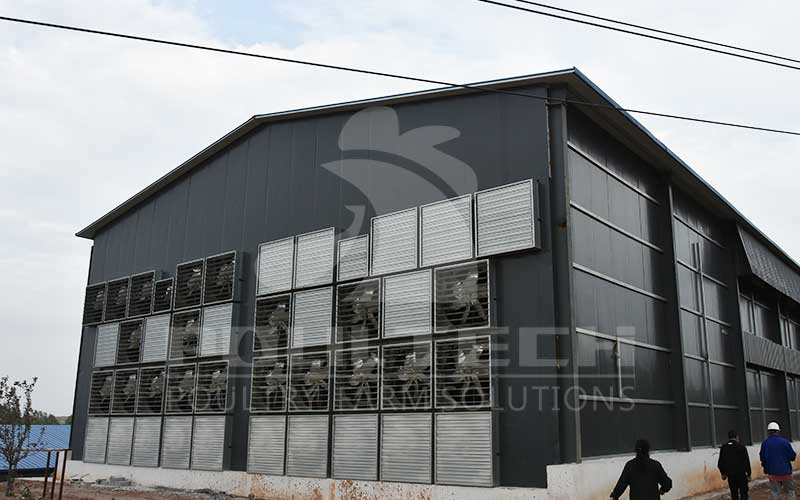
5. Improved air quality: The high-rise cage chicken house is equipped with longitudinal ventilation and air filtration devices, with 6-8 air changes per hour, ammonia concentration controlled below 10ppm, dust reduced by 70%, and significantly reduced the incidence of respiratory diseases.
6. Convenient temperature and humidity control: Equipped with temperature and humidity sensors, variable frequency fans and wet curtain cooling systems, the IoT platform monitors and automatically adjusts environmental parameters in real time. For example, in high temperatures in summer, the combination of wet curtains + fans can make the temperature inside the house 5-8℃ lower than the outside, ensuring the comfort of the chickens.
7. Convenient and efficient daily management: The application of the central egg collection system, automatic manure cleaning belt and mobile feeding vehicle has increased the scale of single-person management from 5,000 chickens in the traditional mode to more than 20,000 chickens. AI cameras can also monitor the behavior of chickens in real time, and the warning response time for abnormal situations is shortened to within 10 minutes.
8. Enhanced disease prevention and control effect: The fully enclosed chicken house structure is combined with a three-level disinfection channel to block the introduction of external pathogens. The layered independent ventilation design avoids cross infection, and with the automatic vaccination equipment, the incidence of diseases is reduced by more than 40%, and the use of drugs is reduced by 30%.
The high-rise cage model not only improves the economic benefits of the enterprise, but also conforms to the national agricultural development policy of “reducing resistance, low carbon and high efficiency”. Its standardized and replicable characteristics provide a technology upgrade path for small and medium-sized farmers, helping to increase industry concentration and integrate the industrial chain.