Detailed explanation of the three major ways to clean manure for broiler chickens
1. Plastic Slatted Manure Removal System
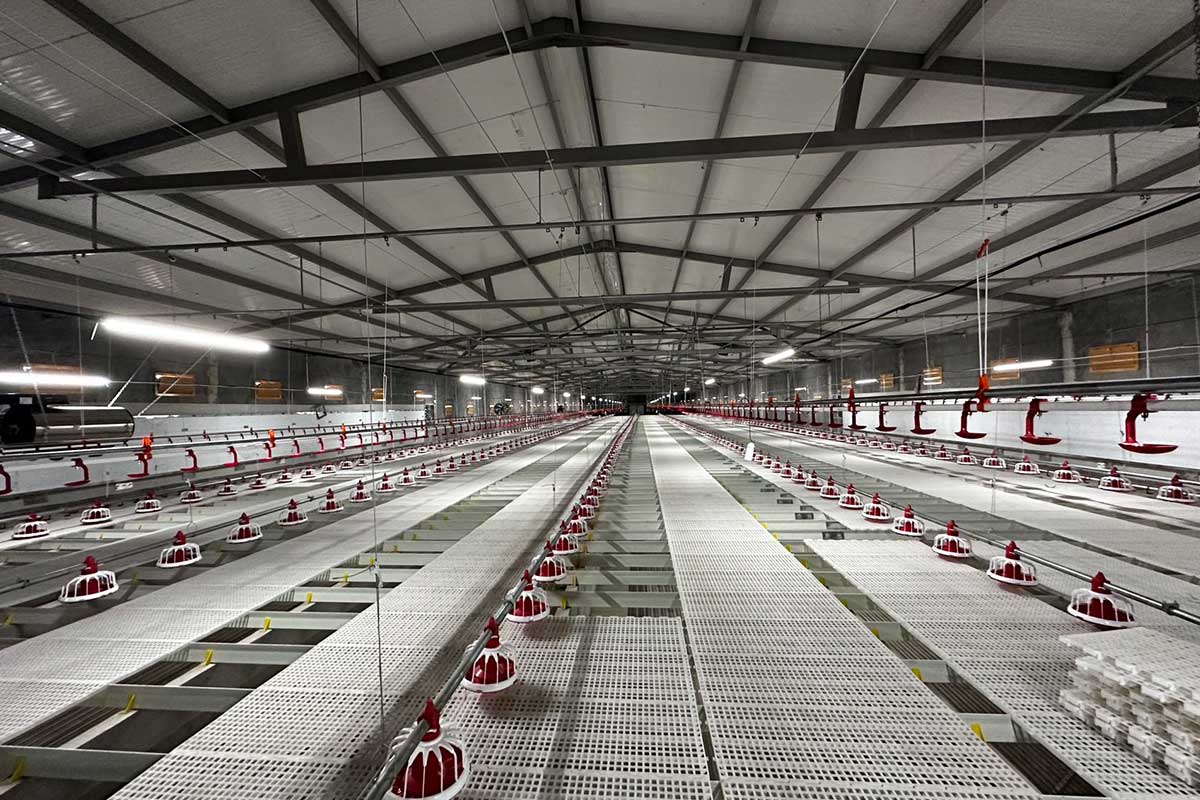
This system involves laying specialized plastic slatted manure boards on the flat floor of the chicken house. The pores in these boards typically measure 2.0 x 2.4 cm, with common sizes of 1200 x 500 x 40 mm. Each board weighs approximately 2300 grams. Using beams and supports, the boards can be installed up to 55 cm above the ground. During the brooding phase, an additional layer of plastic mesh can be placed on top of the boards to protect the chicks’ feet. This can be removed after the chicks reach the middle and later stages of the breeding season.
Chicken manure drains directly onto the floor through the slatted holes, preventing direct contact between the chickens and manure, effectively reducing the risk of disease. After the flock is released, the slatted manure boards can be removed to clean the accumulated manure underneath, making it easy to collect and reuse.
Advantages: Simple operation, effective isolation between the chickens and manure, reducing the risk of disease, and the manure removed is easily recyclable.
Disadvantages: High initial equipment investment costs; manure still needs to be accumulated and cleaned at the end of the batch, which can impact the chicken environment and the health of the flock in the middle and later stages of the breeding season. Tips for calculating the number of plastic slatted floor panels: You can accurately calculate the required number based on the area of the chicken house and the coverage area of each panel to ensure that no panels are left out.
2. Traditional bedding removal method
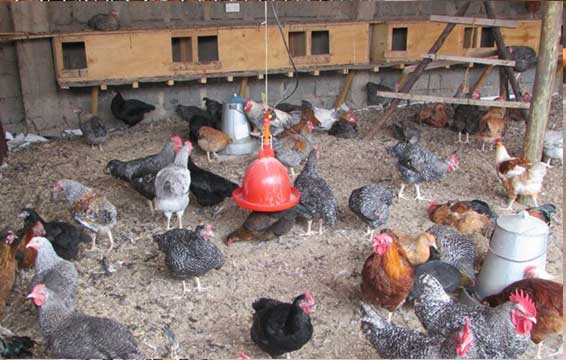
A layer of bedding is laid on the floor of the chicken house. Common materials include wood shavings, wheat straw, sawdust, rice hulls, straw, or sand. After disinfection, the bedding is evenly spread on the floor, allowing the chicken droppings to naturally fall and mix with the bedding. After the entire batch of chickens is released, the mixture of feces and bedding is removed all at once, and the chicken house is thoroughly disinfected.
Advantages: Simple operation and low cost.
Disadvantages: Failure to promptly remove manure can lead to elevated ammonia concentrations in the house, impacting the health and survival rate of the chickens. The mixture removed after release is difficult to reprocess and reuse, resulting in a waste of resources.
3. Slatted floor combined with scraper cleaning system
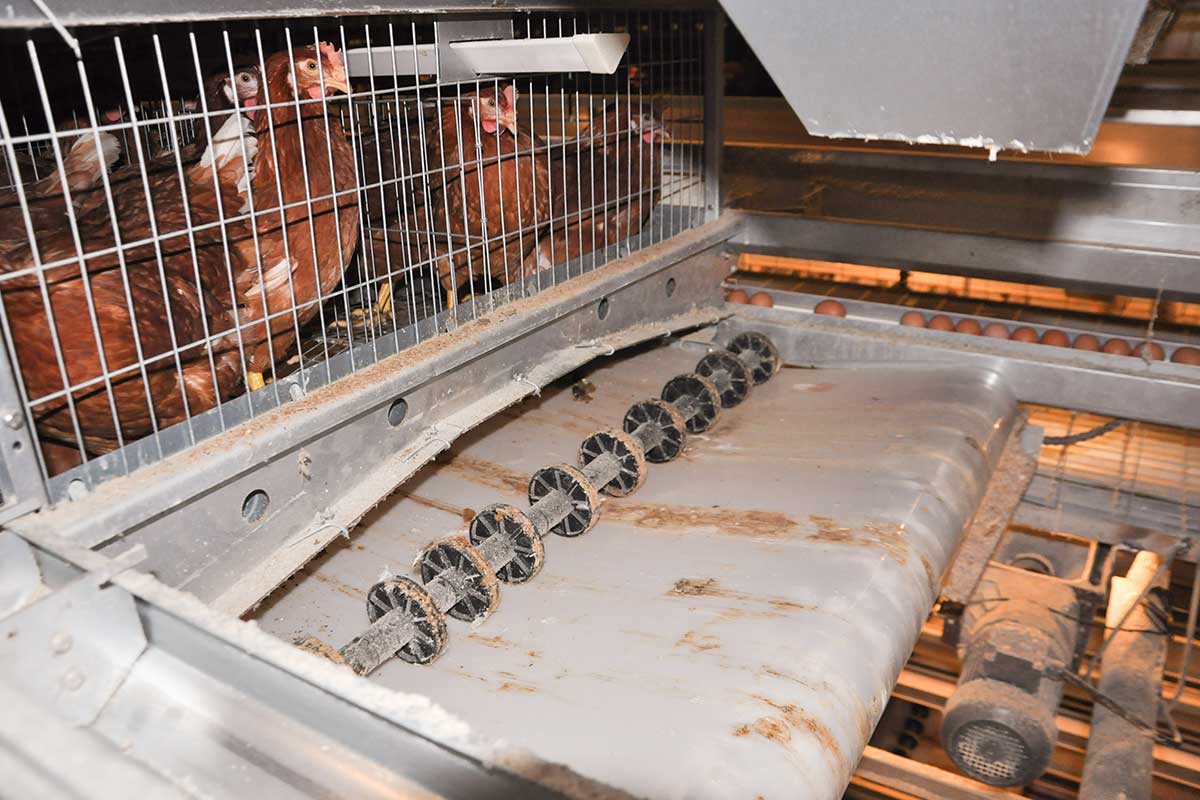
This is a more advanced manure removal solution, integrating a mechanical scraper with a flat plastic slatted floor. This system allows for scheduled or real-time manure removal, promptly removing any manure that leaks onto the floor from the chicken house.
Advantages: This addresses the core issue of delayed manure removal in flat-lay farming, ensuring maximum sanitation, providing a healthy growth environment for the chickens and significantly safeguarding their health.
Disadvantages: This system has the highest initial investment cost, and its design and installation require specialized technical support.
Choosing the appropriate manure removal method requires a comprehensive consideration of the scale of the operation, budget, labor availability, and environmental requirements. With the trend toward modern farming, mechanized systems that ensure timely manure removal (the third method) are becoming a mainstream choice for improving farm efficiency and biosecurity.