Automated Feeding System for Tiered Layer Chicken Farming
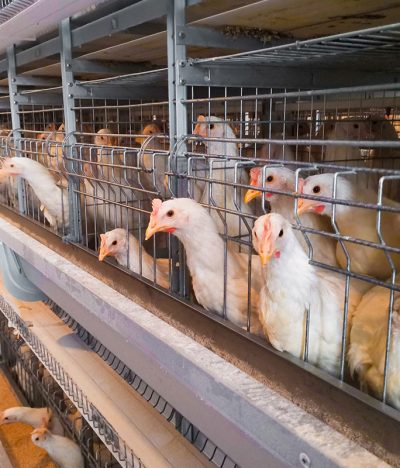
An automated feeding system for tiered layer chicken farms is an intelligent feeding device specifically designed for tiered, stacked chicken cages. Through automated control technology, it achieves precise delivery of feed from the feed tower to the feed troughs throughout the entire process. Suitable for medium to large-scale layer chicken farms, it can significantly improve feeding efficiency and management levels.
Core System Components
A complete automated feeding system typically includes the following modules:
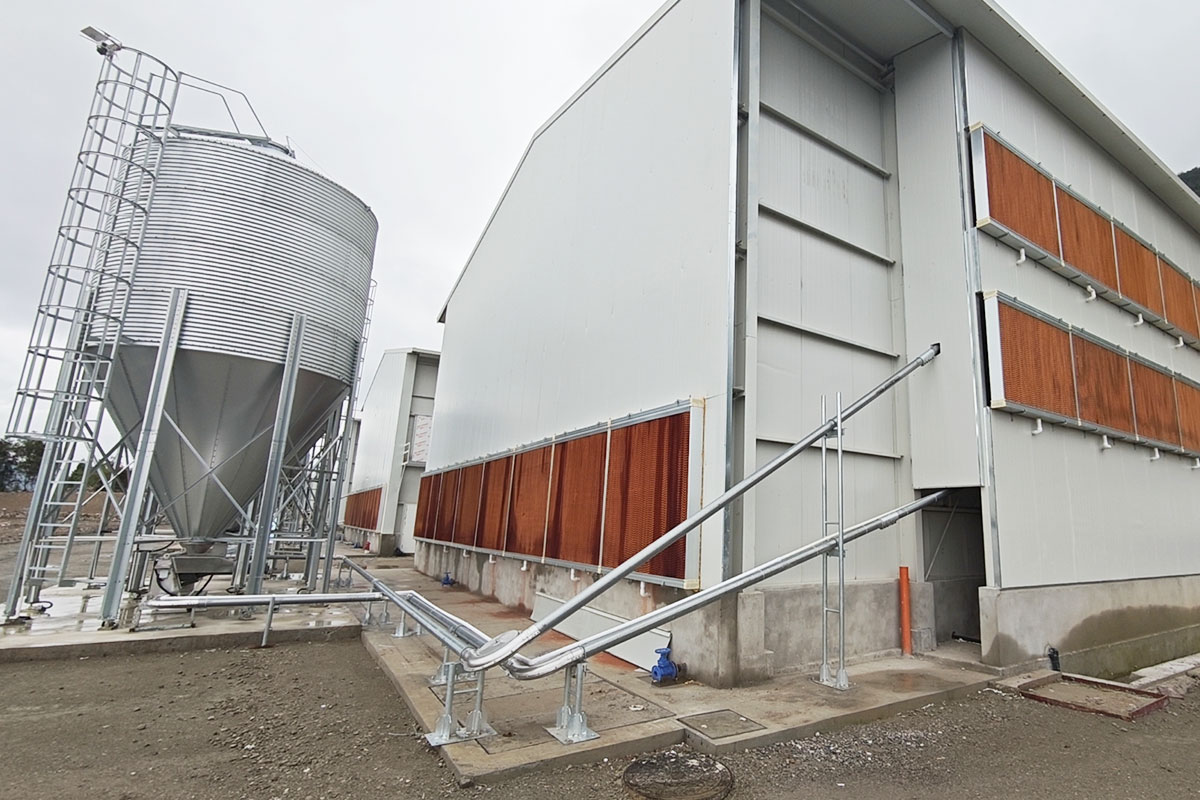
Feed Tower/Storage Bin: Used to store large quantities of compound feed, with capacities ranging from several tons to tens of tons. It can be equipped with feed level sensors for low-feed alarms.
Horizontal Conveying Screw: Transports feed from the feed tower to the overhead feed hoppers or feed lines at each level within the chicken house, with a conveying distance of up to 100 meters.
Lifting Mechanism and Overhead Crane: Travels in front of or above the tiered chicken cages, evenly distributing feed into each feed trough using gravity or a spiral feeding device.
Feed Level Sensors and Controller: Monitors the remaining feed in the troughs in real time, and works with a PLC or microcontroller control cabinet to achieve timed, quantitative, and phased feeding.
Anti-breakage and feed return device: Reduces the generation of powder in feed during transportation and recovers excess feed at the end, avoiding waste.
Workflow Analysis
Feeding Start: According to a preset program (e.g., 5:00, 11:00, 17:00 daily), the system automatically starts the auger motor to deliver feed from the feed tower into the buffer hopper inside the chicken house.
Crane Movement: The feeding crane moves forward at a constant speed along the track, typically 6-8 meters per minute.
Uniform Feed Distribution: Each feed trough corresponds to a feeding port. By adjusting the angle of the feeding flap or the speed of the auger, the amount of feed distributed per layer is controlled to ensure consistent feed intake for chickens in the same row.
Automatic Start/Stop: The crane stops automatically when it reaches the end of the cycle, triggered by a limit switch or positioned by the frequency converter, awaiting the next cycle. If equipped with feed trough sensors, the system will skip the feeding cycle if feed is not completely consumed, preventing feed accumulation and spoilage.
Cycle Completion: After feeding is completed in all chicken houses, the system enters standby mode and records the operation log.
Five Core Advantages of Automated Feeding Systems
1. Significantly Reduced Labor Costs
An automated feeding system can manage 30,000 to 100,000 laying hens simultaneously, requiring only one person for regular inspections. Compared to manual feeding, it reduces the need for 2-4 feeding workers.
2. Precise Feeding, Reducing Feed Waste
Manual feeding often results in spillage, overfeeding, or underfeeding. Automated systems can reduce feed waste from 8%-12% to below 2%. Based on 100,000 laying hens producing 9 tons of feed per day, this translates to a daily saving of 630-900 kg of feed.
3. Ensuring Uniform Flock Growth and Increased Egg Production
Each hen receives an equal amount of feed at the same time, preventing dominant hens from competing for food and weaker hens from going hungry. Experimental data shows that using automated feeding systems improves flock uniformity by 5%-8%, increases egg production by 2%-4%, and results in more uniform egg weight.
4. Reduced Stress and Disease Risk
Fixed-time mechanical feeding reduces stress factors such as noise and unfamiliar odors from frequent personnel entering the chicken house. Chickens eat more steadily, the incidence of digestive system diseases decreases, and the overall mortality rate can drop by 1-2 percentage points.
5. Data-Driven Management for Easier Production Decisions: Modern automated feeding systems can be connected to an IoT platform, displaying real-time feed intake, remaining feed, and equipment operating status for each chicken house. Farm owners can remotely control the system via a mobile app and analyze feed conversion rates based on egg production data to optimize formulas.
Frequently Asked Questions
Q: Can the automated feeding system handle feeds of different particle sizes?
A: Yes. Powdered feed, pelleted feed, and crushed feed can all be used. However, note that powdered feed is prone to bridging, so a bridging vibrator should be installed inside the feed tower. Feeds with high oil content require regular cleaning of the feed pipes.
Q: What should I do in case of a power outage or equipment malfunction?
A: It is recommended to configure a small diesel generator or UPS backup power supply and retain the manual crank emergency feeding function. Most systems also support manual mode for temporary feeding.