Fully Enclosed Chicken House Ventilation Control
In modern intensive poultry farming, fully enclosed negative pressure ventilation chicken houses have become a core facility for precise environmental control. Acting like an “intelligent respiratory system” for chickens, they automatically regulate key parameters such as temperature, humidity, and air quality to best meet the physiological needs of birds at different growth stages, significantly improving production performance and reducing labor costs.
The Core Objectives and Values of Closed Ventilation
1. Adequate Oxygen Supply and Toxic Gas Removal: Continuously supplying fresh oxygen efficiently removes harmful gases such as ammonia (NH3), hydrogen sulfide (H2S), and carbon dioxide (CO2), ensuring healthy respiratory health.
2. Precise Temperature Control:
● Summer Cooling: Removes excess heat from the house and, combined with wind speed (wind cooling), lowers the perceived temperature of the flock.
● Winter Insulation/Heating: Minimizes ventilation volume to conserve heat. If necessary, introduces heated air (via heaters/air conditioners/gas equipment) to raise the house temperature.
3. Humidity Control: Removes excess moisture or uses water curtains for moderate humidification to maintain a suitable humidity range.
4. Dust Removal and Purification: Effectively removes dust particles from the air, reducing the growth and spread of pathogens such as bacteria and viruses.
5. Uniform Air Supply: Ensures there are no dead spots in the house, ensuring that every bird receives fresh, even airflow and a consistent environment.
6. Reduce stress and improve production: A stable environment greatly reduces the stress response of the chickens (such as sudden temperature changes), keeps their physiological functions in the best state, and fully realizes their genetic potential (such as egg production rate and weight gain).
Core Ventilation System Components and Functions
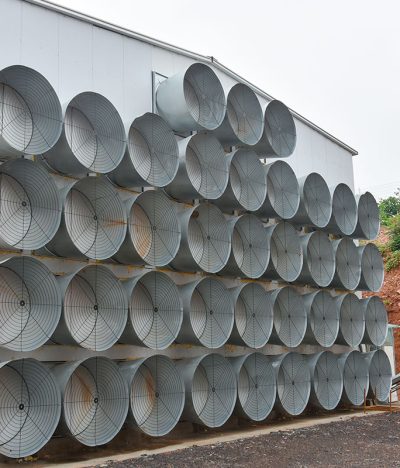
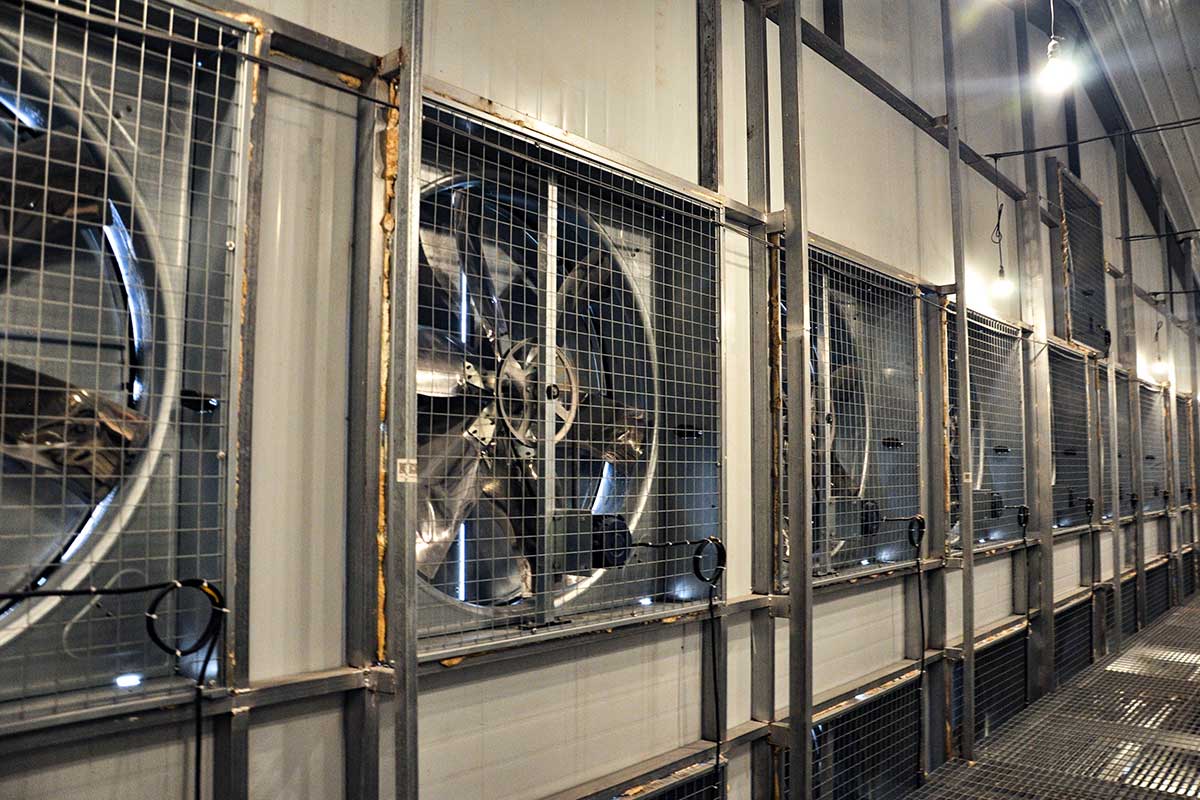
1. Ventilator (Exhaust Fan):
● Type: Mainly classified as longitudinal fans (high air volume, primarily used for cooling and ventilation in summer) and transverse fans (lower air volume, primarily used for minimum ventilation in winter).
● Function: These fans are the core power source for generating negative pressure and driving air flow within the house. Their start/stop and speed are controlled by a timer or thermostat.
● Configuration: The number and power of these fans must be precisely calculated based on the type of chicken (layers/broilers), stock size, house size, and local climate. Ensure that the total ventilation capacity meets maximum demand (in hot seasons).
2. Air Inlets:
● Winter Air Inlets (Side Windows/Small Windows):
Usually located high on the side walls or under the eaves.
They open under negative pressure, allowing fresh air to enter the house at high speed and at a specific angle (usually designed to hit the roof).
Key Function: Allows cold air to thoroughly mix with the warm air at the top of the house, preheating it before evenly settling to the chickens’ active zone, protecting them from direct cold drafts (drafts).
● Summer air inlet (water curtain/wet pad):
Located on the end wall or side wall opposite the fan.
This is the core component for summer cooling. When hot air passes through the moistened, specially formulated water curtain paper, the water evaporates and absorbs a significant amount of heat, significantly cooling the air entering the house (the principle of evaporative cooling).
This system must be paired with a sufficient number of vertical fans to ensure smooth airflow through the water curtain.
3. Temperature Control Equipment:
● Winter heating equipment: Such as gas-fired hot air furnaces, fan heaters, and heaters. These are primarily used to supplement heat and maintain target temperatures during the brooding period or in extremely cold regions.
● Summer cooling equipment: The core component is the water curtain system. Its size and thickness must be precisely calculated to match the fan air volume. Insufficient area or uneven distribution will result in large temperature differences between the front and rear ends and uneven humidity, seriously affecting cooling effectiveness and flock comfort.
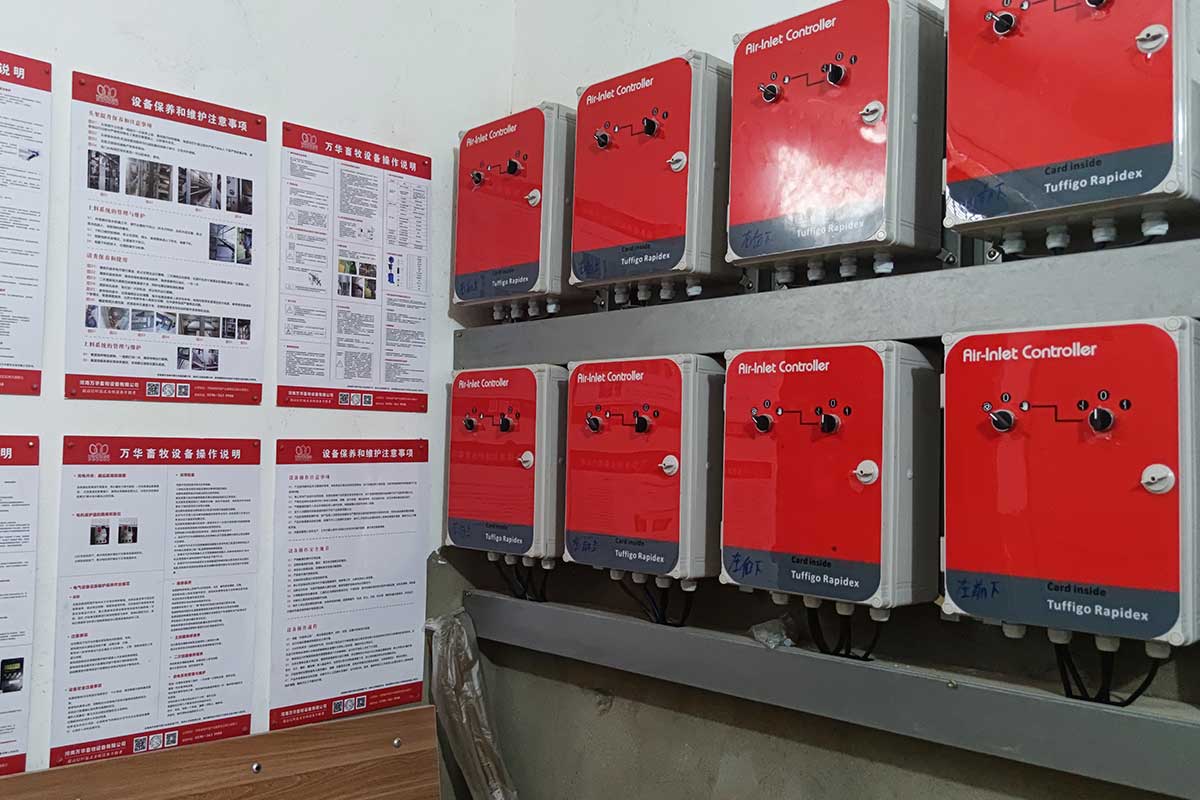
4. Environmental Controller:
● The “brain” of the system. It integrates sensors for temperature, humidity, timing, and negative pressure.
● Automatically control the fan start/stop/speed, air inlet opening, heating/cooling equipment operation, etc. according to the preset program (target temperature curve for different age groups, ventilation level) to achieve stable environmental parameters.
Key Points for Achieving Optimal Ventilation
1. Ensure High Airtightness in the Poultry House: Regularly inspect and repair gaps in walls, doors, windows, and roofs; this is a prerequisite for precise ventilation.
2. Accurate Equipment Selection and Matching: The total fan air volume, drencher area, and number and location of air inlets must be scientifically calculated and matched.
3. Reasonable Air Inlet Design and Management: Ensure even distribution of openings to ensure adequate mixing of cold air in winter and uniform air flow through the drenchers in summer.
4. Scientifically Establish Environmental Parameter Profiles: Set appropriate temperature, humidity, and ventilation target values based on flock breed, age, and stocking density, and adjust them seasonally.
5. Regular Maintenance: Clean fan blades, louvers, and drencher systems, inspect motor belts, and calibrate sensors to ensure efficient and reliable equipment operation.
6. Continuous Monitoring and Recording: Real-time monitoring of house temperature, humidity, negative pressure, and hazardous gas concentrations, and record equipment operating status to identify and adjust any issues promptly.
Ventilation control in a fully enclosed chicken house is more than simply opening windows for ventilation; it’s a sophisticated systems engineering process that integrates fluid mechanics, thermal engineering, animal physiology, and automated control. Mastering the principles of negative pressure ventilation, strictly controlling chicken house airtightness, and rationally configuring and meticulously managing ventilation and cooling equipment are the core technologies for achieving healthy poultry farming, stable high yields, and reduced overall costs. Investing in and optimizing your ventilation and environmental control system is investing in the future competitiveness of your farm.